REVIEW · AVATORU
BLUE LAGOON | Eco-tour | Snorkeling Avatoru | Secret Green Lagoon
Book on Viator →Operated by Rangiroa Excursion · Bookable on Viator
Turquoise water and reef sharks, no planning needed. This is an eco-day built around Rangiroa’s Blue Lagoon and a tight small group feel, with snorkeling plus hands-on local culture. I love that you get wildlife-focused time in the water, and I also like how lunch happens on a private motu instead of a generic stop. One thing to consider: the boat ride can be long and a bit rough, so plan for some motion.
What makes this day work is the pacing. You’re not rushing through one photo spot and out. You snorkel, rest, learn, eat, then snorkel again—plus you end with coffee and cakes at the Secret Green Lagoon. The guides I’ve seen mentioned by name (like Brando, Poema Burns, and Leticia) come across as warm, organized, and genuinely into sharing what they’re showing you.
In This Review
- Key highlights at a glance
- Rangiroa Lagoon Day: Blue Lagoon to Secret Green Lagoon
- Boat ride reality: timing, comfort, and what to pack
- Stop 1: Snorkeling in the Bay of Sharks
- Main island eco-tour: shark nurseries, seabirds, skates, corals, beaches
- Braiding workshop and traditional music: culture you can do, not just watch
- Lunch on a private motu: local food, shade, and a slower pace
- Avatoru Pass snorkeling: only if the current plays nice
- Secret Green Lagoon: coffee and cakes to end on a calm note
- Price and value: is $139.68 worth a full-day eco-lagoon plan?
- Who should book this (and who should choose differently)
- Should you book the Blue Lagoon eco-tour in Rangiroa?
- FAQ
- How long is the Blue Lagoon eco-tour?
- What’s the price per person?
- Are pickup and transportation included?
- Where do we snorkel during the day?
- What happens during the eco-tour portion?
- Is there a cultural activity?
- What food is included?
- What group size should I expect?
- What weather conditions are required?
- What are the cancellation terms?
Key highlights at a glance
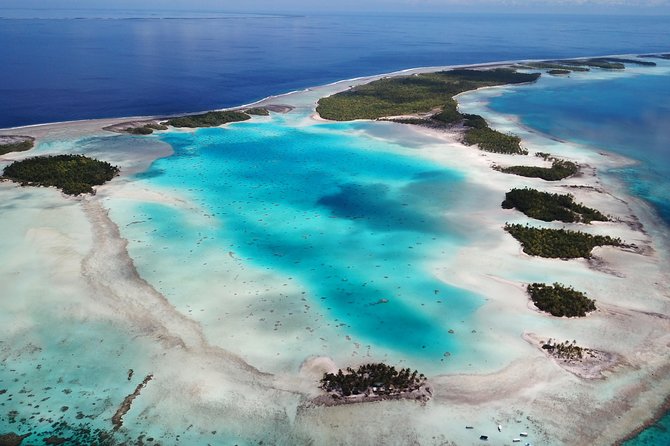
- Blue Lagoon and more snorkeling: Bay of Sharks, then Avatoru Pass if conditions are favorable.
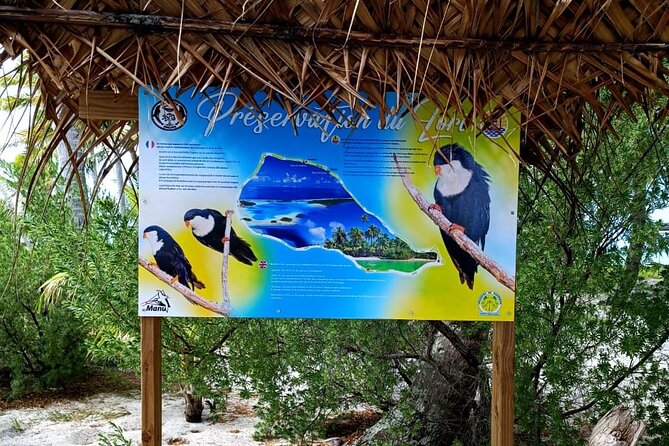
- Eco-tour learning moments: shark nursery areas, seabirds, skates, and coral-and-beach observations.
- Culture built into the day: a braiding workshop plus traditional music time.
- Lunch on a private motu: local food in the shade with a real island vibe.
- Secret Green Lagoon finish: coffee and cakes to slow the pace before you head back.
Rangiroa Lagoon Day: Blue Lagoon to Secret Green Lagoon
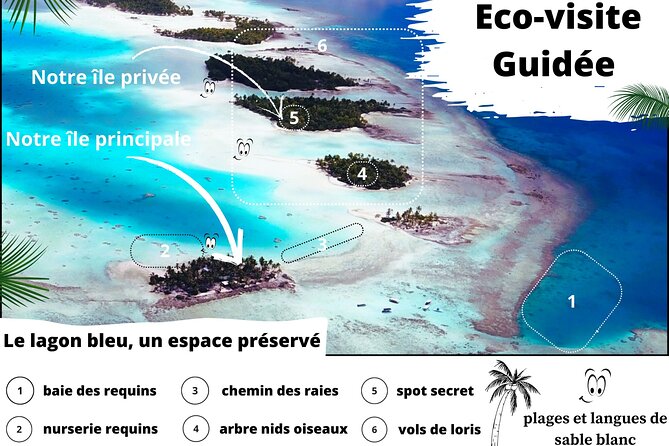
This tour is a classic Rangiroa full-day format, but with a strong eco-and-culture angle. You start on the water early, then bounce between lagoon snorkeling and land-based experiences that explain what you’re actually seeing. Instead of treating the day like a checklist, it feels like you get to understand the lagoon while you enjoy it.
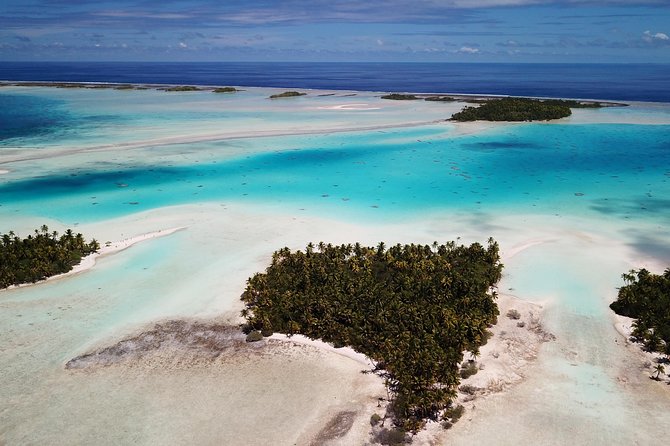
Why I’d pick this over a quick boat-and-back option: you get multiple different water stages. Blue Lagoon snorkeling is the headline, but the Secret Green Lagoon at the end changes the visual mood completely—lighter, calmer, and very “postcard but real.”
Also, the group size matters here. With a maximum of 12 travelers, you’re more likely to get individualized attention in the water and quicker help if you’re still getting comfortable with snorkel time.
Boat ride reality: timing, comfort, and what to pack
The day runs about 8 hours. You’ll be picked up in the morning (for Tiputa, the appointment is at the Ohotu quay at 8:20 a.m., using a taxi boat at the operator’s expense), then you check out by boat shortly after 9:00 a.m. Expect a good chunk of time on the water between stops.
Here’s the practical drawback: reviewers mention the boat ride can be long and sometimes rough. That means you should think about motion sickness if you’re sensitive. It also explains why the tour is better when you come ready to relax rather than fight the waves.
Bring water shoes if you have them. Several tips mention this specifically, and it makes sense for sandy-but-still-sharp coastal spots and getting in and out of the water. If you prefer your own gear, you might also bring your snorkel and mask—again, that comes up in advice you’ll see from people who’ve done this before. And bring sun protection. You’re not on a shady beach resort; you’re out on open water.
Stop 1: Snorkeling in the Bay of Sharks
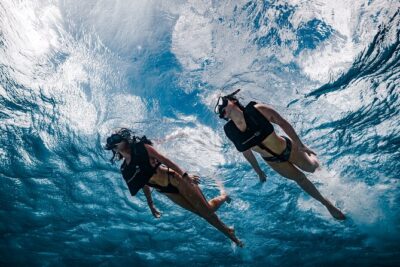
The first big water moment is snorkeling in the Bay of Sharks around 10:00 a.m. This is the kind of spot that makes Rangiroa famous: clear lagoon visibility, calm-feeling swim areas, and lots of marine life doing marine-life things.
What you should expect is not just “sharks = cool.” The tour is structured so you learn the context: later you’ll hear about shark nurseries and the broader ecosystem. That makes the snorkeling feel more meaningful than simply spotting fins.
In reviews, people describe seeing black-tip reef sharks and even sting rays at/near their feet. There’s also mention of dolphins and schools of fish. You can’t treat sightings like a guarantee, but the variety reported here is consistent with Rangiroa’s lagoon reputation.
The best mindset: float, breathe, watch. If you go fast and chase movement, you’ll miss the slow drama—fish that hang around and sharks that glide in for a look.
Main island eco-tour: shark nurseries, seabirds, skates, corals, beaches
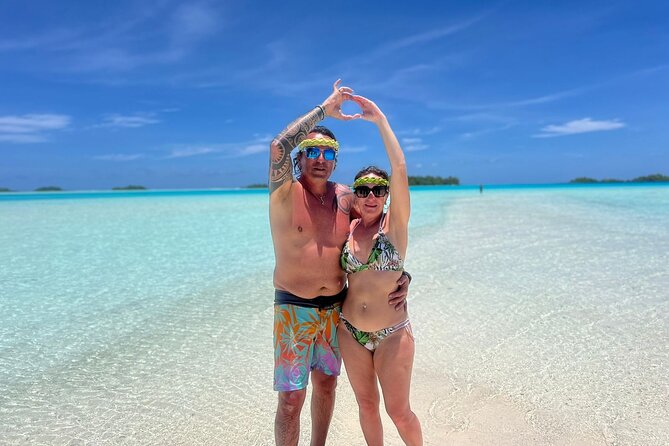
After the Bay of Sharks swim, you land back on the main island around 10:30 a.m. and get a snack and bathing time. Then the eco-tour kicks in around 11:15.
This is where the day earns its eco label. You’ll get guided observations tied to real habitat features: shark nurseries, seabirds, skates, flora and corals, and beach areas. It’s the difference between “cool nature” and “nature with names and reasons.”
A big value here is your attention level. When someone explains what you’re looking at, you start noticing details you’d otherwise miss—where different animals feed, why certain areas look the way they do, and how the lagoon’s protected zones support life.
You’ll also be outside quite a bit, so if you’re shade-sensitive, this is the time to pace yourself between the walking/standing moments and the water moments.
Braiding workshop and traditional music: culture you can do, not just watch
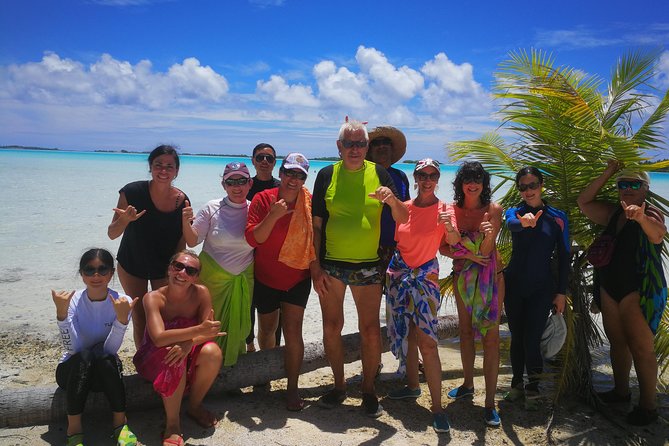
Around noon, the tour shifts from ecology to culture: a braiding workshop and traditional music. This is one of the stronger “authentic feel” blocks in the day because you’re not just sitting and listening from a distance.
Braiding is hands-on and physical. Even if you’re not great at it, you’re doing something real, and that tends to make the experience stick. Traditional music time adds atmosphere without turning the day into a stage show.
If you like travel days that add meaning beyond scenery, this portion is a win. It’s also a good mental reset. After time on the water, your body often wants a change of rhythm, and workshop time does that well.
Lunch on a private motu: local food, shade, and a slower pace
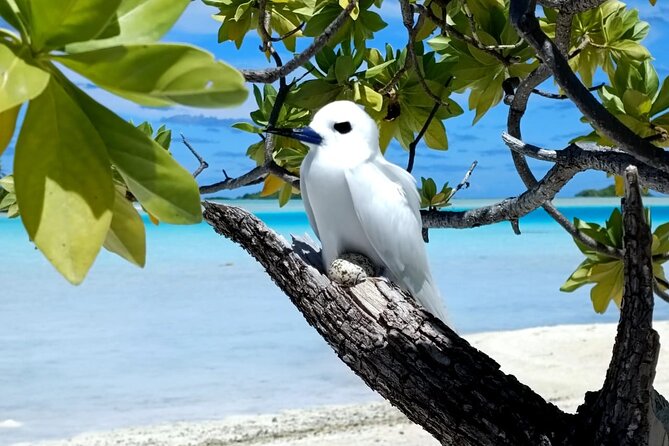
Lunch comes with aperitif time and local food around 12:45 p.m. This is also where the day becomes genuinely relaxing for many people: lunch on a private motu (small island) gives you the “you’re out here for a reason” feeling.
Several reviews mention that the lunch stop is shaded and breezy. That matters on lagoon days. Sun exposure is real, and a breezy shaded break helps you enjoy the next snorkeling window rather than just surviving it.
Food quality gets praised strongly, including comments about BBQ lunch and delicious local dishes. One review even notes they picked up fresh fish from a local fisherman on the way to the beach for BBQ lunch. That’s exactly the kind of local-food detail that makes the meal feel connected to the place.
After lunch, there’s free time (around 1:30 p.m.). Use it. This isn’t a day that rewards nonstop movement. The best photos often happen when you slow down and sit with the water for a few minutes.
Avatoru Pass snorkeling: only if the current plays nice
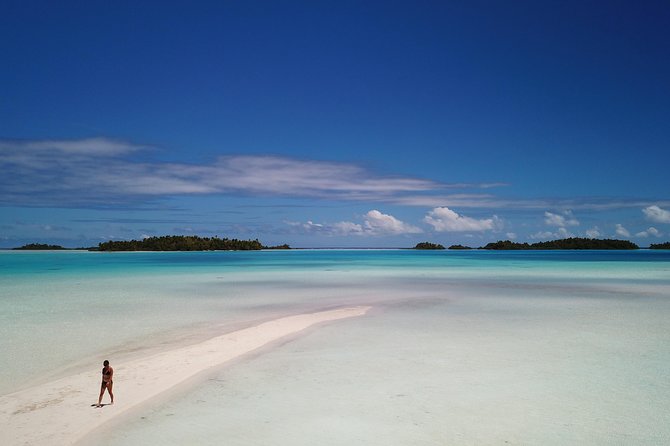
Mid-afternoon, the tour offers more snorkeling at Avatoru around 3:15 p.m. (timing can vary) with a key condition: it’s done if the current is favorable.
That “if conditions are right” detail is important. It’s not just a safety thing; it’s also why Avatoru can be spectacular when you’re able to snorkel in the right waterflow. If the current isn’t ideal, you’re not forced into a less enjoyable or less safe plan.
Reviews mention a Chute through Avatoru Pass leaving people speechless, and they also talk about final-amazing snorkel moments here. So when it does happen, it’s often treated as a highlight.
If you’re a snorkeler, this is the part that keeps the day from feeling like a single-lagoon repeat. Two different swim areas on one day is what makes the day feel full without feeling rushed.
Secret Green Lagoon: coffee and cakes to end on a calm note
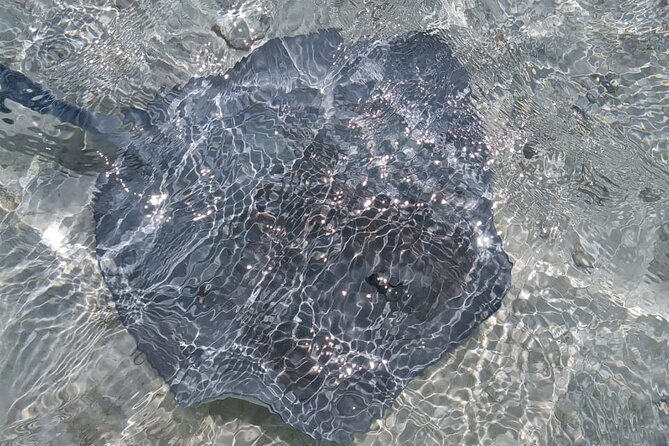
The day wraps with the Secret Green Lagoon, with coffee and cakes in the afternoon (listed around 3:45 p.m.). This is a smart finish. You’ve already had the energetic water moments; now you get something light and gentle.
The “green” tone also changes how you read the water visually. Blue Lagoon moments are all about bright turquoise and reef sparkle. The Green Lagoon feels softer and more mellow, like a different mood setting for the same lagoon story.
It’s also a practical closer. By the time you’re eating cake and sipping coffee, you’re likely ready to head back without feeling like you’ve been out all day with no real downtime.
Price and value: is $139.68 worth a full-day eco-lagoon plan?
At $139.68 per person, this isn’t a “cheap excursion,” but it also isn’t priced like a private yacht fantasy. What you’re paying for is the full structure: multiple snorkeling sessions, an eco-tour with guided observation, culture activities, and lunch on a private motu—plus pickup where applicable.
In plain terms, value comes from three big buckets:
- Time and access: two lagoon-focused snorkeling stops plus land-based eco learning.
- Real inclusions: snack, aperitif/lunch, coffee and cakes—so you’re not constantly searching for food later.
- Small group handling: max 12 travelers, which usually means better guide-to-person attention.
If you only cared about one short snorkel session, you could find cheaper options. But if you want a day that feels like Rangiroa—not just a couple of photos—this price can make sense.
It’s also worth noting that admission ticket is listed as free, and you’ll use a mobile ticket. That reduces friction once you’re there.
Who should book this (and who should choose differently)
I think this tour suits you if you fit one of these:
- You love snorkeling and want more than one chance to swim.
- You like nature explanations as much as the scenery.
- You want culture that includes a do-it-yourself moment (braiding) and music, not just passive viewing.
- You prefer small-group tours where the guide can keep an eye on everyone.
You might choose something else if:
- You’re very motion-sensitive and dread boat rides. The schedule includes travel time by boat, and the ride can be rough for some people.
- You need a highly relaxed day with minimal transfers. This is a full day, not a slow half-day beach hang.
Should you book the Blue Lagoon eco-tour in Rangiroa?
Yes, if you want a day that’s actually built around what makes Rangiroa special: lagoon snorkeling plus guided ecology plus local food on a motu. The strongest selling points are the mix of wildlife-focused time and cultural elements, and the fact that lunch and snacks are woven into the day instead of being an afterthought.
Before you say yes, check your comfort with boats and sun. Pack for the water, plan for motion, and bring the kind of mindset that says: I’m here to watch, float, and learn. If that sounds like your travel style, this is an easy “book it” day.
FAQ
How long is the Blue Lagoon eco-tour?
The tour duration is listed as about 8 hours.
What’s the price per person?
The price is $139.68 per person.
Are pickup and transportation included?
Pickup is offered. For cruise ship passengers, it notes round trip transfer from Ohotu dock, and for Tiputa the pick-up is at Ohotu quay at 8:20 a.m. Taxi boat is at the operator’s expense.
Where do we snorkel during the day?
You’ll snorkel in the Bay of Sharks first, and you may also snorkel in Avatoru Pass if the current is favorable. The Secret Green Lagoon is later in the day with coffee and cakes.
What happens during the eco-tour portion?
The eco-tour includes observations related to shark nurseries, seabirds, skates, flora, corals, and beaches.
Is there a cultural activity?
Yes. There’s a braiding workshop and traditional music.
What food is included?
You’ll have a snack and bathing time, an aperitif and local lunch on a private motu, and coffee and cakes at the Secret Green Lagoon.
What group size should I expect?
The tour has a maximum of 12 travelers.
What weather conditions are required?
The tour requires good weather. If it’s canceled due to poor weather, you’ll be offered a different date or a full refund.
What are the cancellation terms?
Free cancellation is offered up to 24 hours in advance of the experience start time for a full refund. If you cancel less than 24 hours before, the amount paid is not refunded.