REVIEW · LAGOS PORTUGAL
Lagos: Algarve Coasteering and Snorkeling Adventure
Book on GetYourGuide →Operated by Sea Land Algarve · Bookable on GetYourGuide
Nothing beats cliff meets sea.
This coasteering adventure along the Vicentine Coast near Sagres mixes hiking, climbing, swimming, and cliff jumps into one 4-hour burst of salt-air fun. I love the way you move along the rocky shoreline without boats, and I love the safety-first vibe with guides like André who help you pick a jump height that feels right. The one thing to consider is that this is genuinely physical, and it is not for low-fitness days or weak knees.
Your base for the action is Ingrina Beach, with a proper safety briefing and gear fit. Then you head out to explore caves and remote coastline where you can only reach it by foot and swim. If you are expecting nonstop snorkeling, adjust your mindset: snorkeling is only a small part and depends on sea visibility.
In This Review
- Key highlights worth caring about
- Coasteering on Portugal’s Vicentine Coast: what you’re really doing
- The setting: Ingrina Beach, caves, and why Sagres feels different
- Getting to the start: pickup around Lagos and Sagres
- Gear check at Ingrina Beach: the part that makes the rest safer
- The coasteering route: hiking, climbing over water, and controlled chaos
- Cliff jumps up to 11m: how you keep control when your stomach says no
- Snorkeling as a bonus, not the main event
- Vila do Bispo and Raposeira stretch: the land legs get a mini reset
- Price and value: is $76 worth it
- Who this tour fits best (and who should skip it)
- What to pack and how to avoid common mistakes
- Should you book Sea Land Algarve coasteering?
- FAQ
- How long is the activity, and how much time is in the water?
- Where does the tour start and end?
- Is snorkeling guaranteed?
- What is included in the price?
- Do I have to jump from the highest cliffs?
- Are kids allowed on this tour?
- What should I bring?
- Is this tour for non-swimmers?
Key highlights worth caring about
- Full coasteering kit included: wetsuit, buoyancy aid, helmet, specific boots, protective shorts, and snorkeling gear.
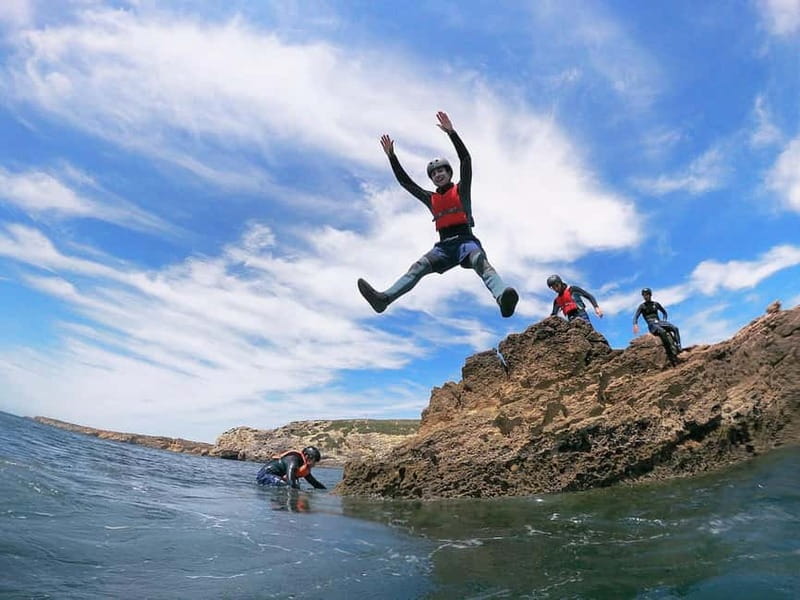
- Cliff jumps from 1m to up to 11m with optional choices if you feel nervous.
- Small group size (up to 14) so you get real attention, not a conveyor belt.
- Guides take photos and videos so you can relive your jumps without awkward guesswork.
- Snorkeling happens when conditions allow so the tour stays focused on the coastline experience.
Coasteering on Portugal’s Vicentine Coast: what you’re really doing
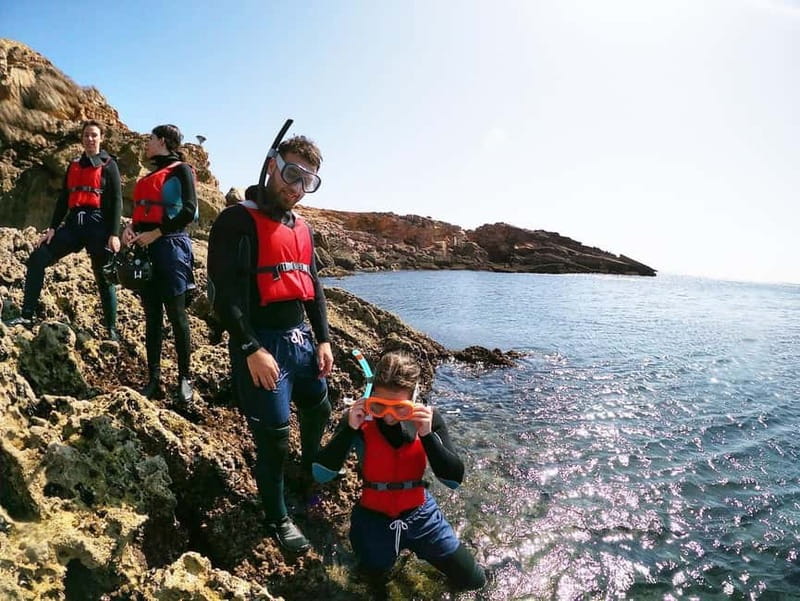
Coasteering is basically shoreline travel by climbing, walking, and swimming along the intertidal rocky zone. No surfboards. No boats. No pretending you are doing a casual beach walk. You are using your body and the coastline itself as your route.
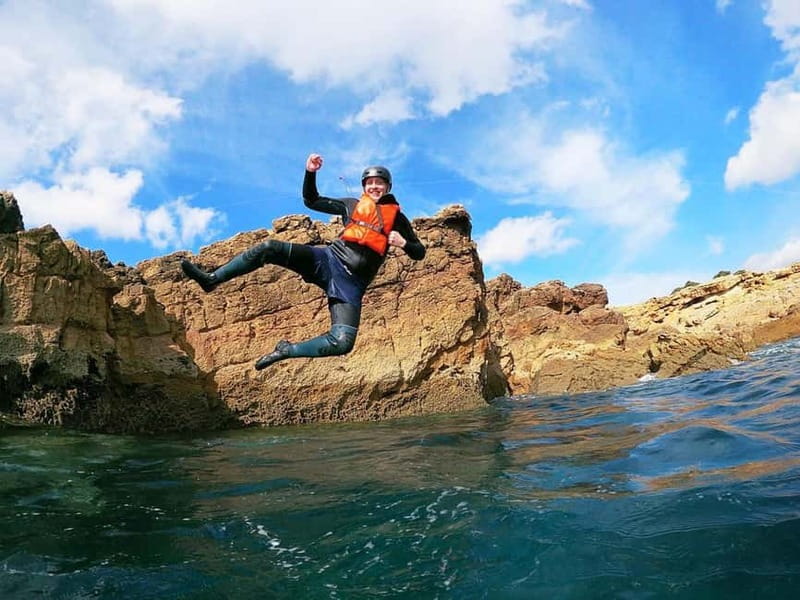
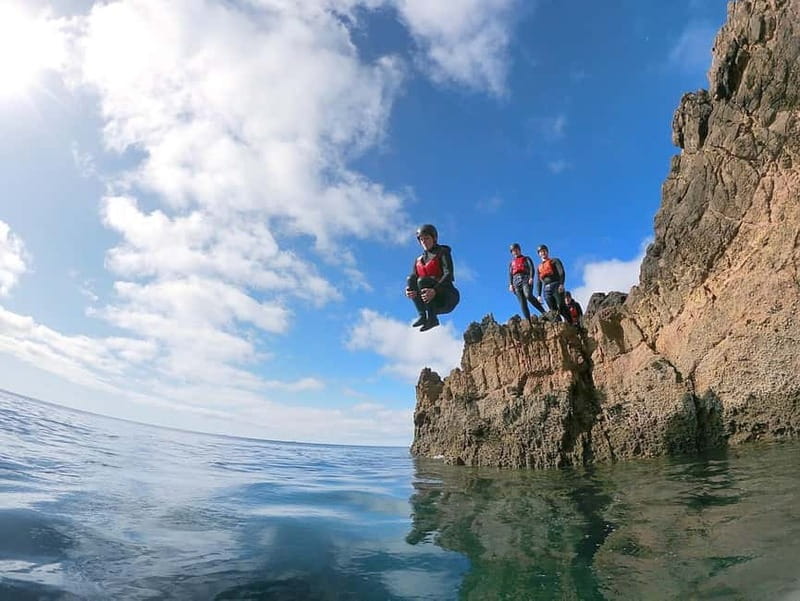
In this outing, the itinerary is built around moving through the sea-and-rock in a sequence that works. You hike along cliffs. You climb over clear water. You swim and squeeze through coastal sections that feel remote. And yes, you jump into the sea from set points ranging from 1 meter up to as high as 11 meters when conditions and your comfort line up.
I like that the tour is not just about adrenaline. You also get stops to explore underwater life with snorkeling equipment when sea visibility is good enough. In other words, it is not one long “jump or nothing” exercise. You get physical variety plus a look at the marine world you would miss from a viewpoint.
The setting: Ingrina Beach, caves, and why Sagres feels different
The tour runs in the natural park of the Vicentine Coast, near the historic fishing area of Sagres, about 30 minutes from Lagos. That detail matters because you are not staying inside the easy, crowded-beach loop. You are going for shoreline sections that feel wilder and more rugged.
Your tour starts at Ingrina Beach. That is where you get your safety briefing and where the water time begins. From there, the coastline route leads you past caves and along cliff sections where the sea looks unusually clear in calm moments.
It also helps that the group stays small. A lot of “adventure” tours turn into a line. Here, you have enough space and time for the guide to check what everyone can do and where they might need more encouragement.
Getting to the start: pickup around Lagos and Sagres
Plan for a pickup that happens roughly 45 minutes before the activity starts. You get two pickup location options near Lagos:
- Av. dos Descobrimentos 37, EM1257 41
After the tour, there are two drop-off locations at the same places. If you are staying in Lagos or the Sagres-area, this kind of pickup keeps you from worrying about buses, parking, or how to time a taxi to the exact tide-and-route moment the guide needs.
Timing-wise, the van ride segments are listed as about 30 minutes each way. In practice, the pacing is built around the time you need on the coast, not around sightseeing detours.
One small heads-up: what feels like a short excursion on paper can still feel like a full morning or afternoon because you are constantly suiting up, listening, moving, and climbing. If you like to fill your days lightly after tours, you may want to keep the rest of the day flexible.
Gear check at Ingrina Beach: the part that makes the rest safer
Your first real step is the safety briefing at Ingrina Beach (about 15 minutes). This is not just rules on paper. It is the moment the guide explains how you will move, how jumps work, and how to handle the rocky sections.
Then you get fitted and equipped with the full set:
- warm protective full wetsuit
- buoyancy aid
- helmet
- specific coasteering boots
- protective shorts
- snorkeling goggles and snorkel
You will also get water and a small snack as part of the included package, which is a nice detail when you are about to spend several hours using your legs and core.
What is not included: sunscreen and a towel. Bring those. Even in cooler coastal weather, you will still feel sun, wind, and salt on skin.
If you have never done coasteering, I’d treat this gear moment as your confidence builder. The wetsuit and helmet change everything. Your body stops thinking about cuts and cold and starts focusing on what the guide is asking you to do.
The coasteering route: hiking, climbing over water, and controlled chaos
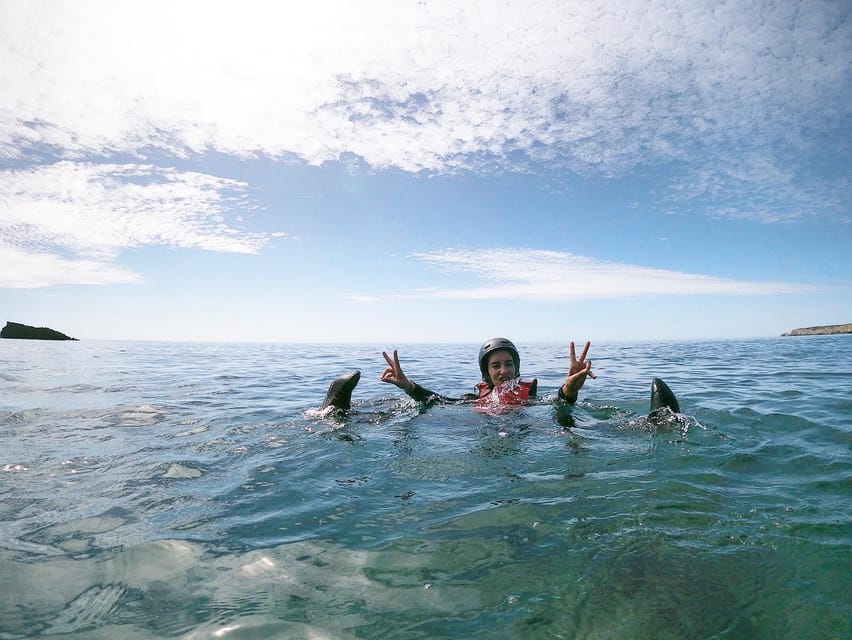
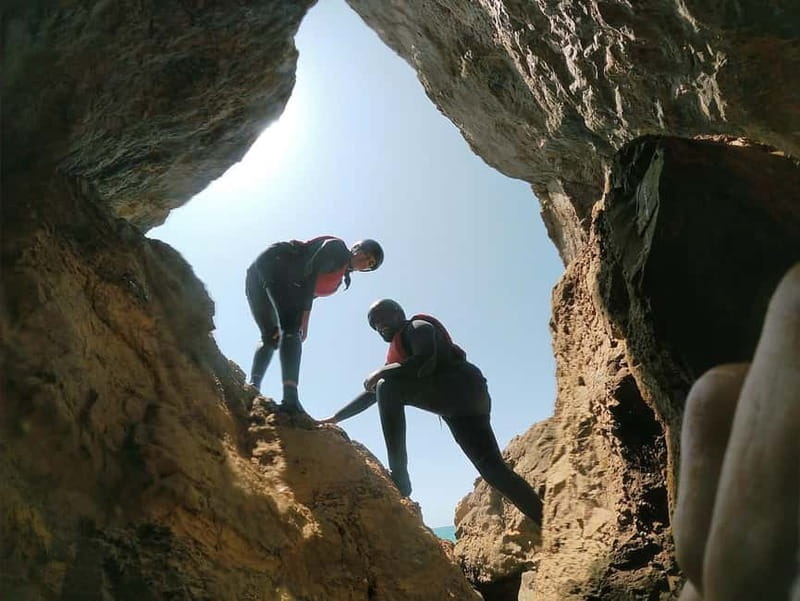
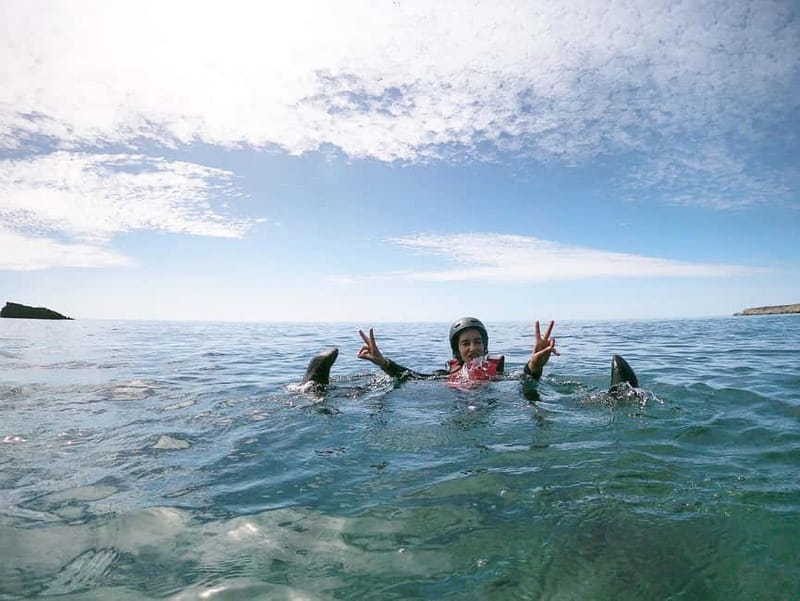
Once you start moving, the tour becomes a sequence of coastline skills. You hike along cliff edges and down rocky sections. You climb over clear water where it is more like stepping over a shallow channel than wading through. You swim when the route forces you to, not because you want to.
This is where the guide’s job shows up. Guides like André are praised in the reviews for being patient, for adjusting the pace, and for making people feel secure even if they are afraid of heights. That matters because coasteering is often a mix of courage and technique. The technique is learnable in minutes; the courage needs time.
Cliff jumping is the obvious headline. But you should also know that the tour gives you options. Reviews repeatedly mention that you do not have to do the biggest jump if you do not feel ready. The guide helps you choose a height you are comfortable with, and the group moves step-by-step.
Jump height on this tour can range from 1 meter up to 11 meters, depending on the jump point and conditions. If you are nervous, that range is a gift. Start smaller. Build momentum. Then decide.
One more practical note: because you are moving across rocks and into water, this is not the time for heavy jewelry or anything you hate losing. Keep it simple.
Cliff jumps up to 11m: how you keep control when your stomach says no
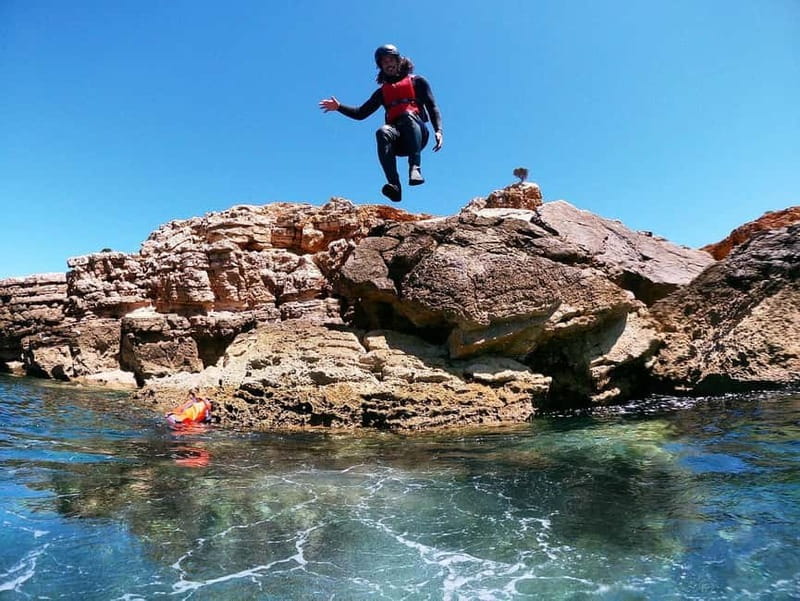
The cliff jumps are the moment most people talk about afterward. The height adds adrenaline fast. You might feel the nerves in your legs before you even step near the edge.
Here is the value of doing this with a qualified guide and lifeguard-certified support. The activity is built around safety briefings, equipment, and technique. The guide is also there to spot issues early, not after you land.
From the feedback, two themes show up again and again:
- Guides stay patient and supportive, even with first-timers and people with a fear of heights.
- Safety and comfort are prioritized, and you choose what you do at your own level.
André gets named a lot, especially for patience with jump nerves. João and Francisco are also mentioned as expert guides who helped people feel confident with challenging climbs and jumps.
If you are the type who needs mental permission before jumping, I suggest you tell the guide right away. You will waste less time working yourself up in silence, and you will still get the full experience.
Snorkeling as a bonus, not the main event
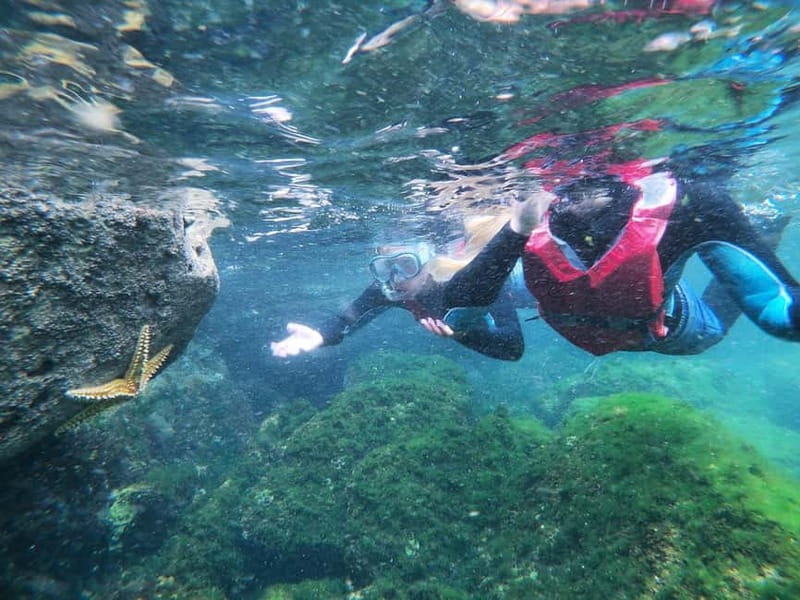
Snorkeling in this tour is intentionally treated as a bonus. The tour is coasteering first. Snorkeling is included only if sea visibility conditions allow.
That approach makes sense. If the water is murky, you do not get a great view anyway, so forcing snorkeling would just add frustration. Instead, you focus on the coastline sections that do work.
When visibility is good, snorkeling becomes a meaningful pause. It is your chance to see underwater life that the coastline shelters. In at least one review, the guide even brings up the marine world directly, like locating sea life such as an octopus for people to hold. That kind of moment is exactly why a guided approach adds value, because you learn what you are seeing and not just that there is water.
Even if snorkeling ends up being limited, you still get the physical and scenic core: hiking, climbing, swimming, and cliff jumping.
Vila do Bispo and Raposeira stretch: the land legs get a mini reset
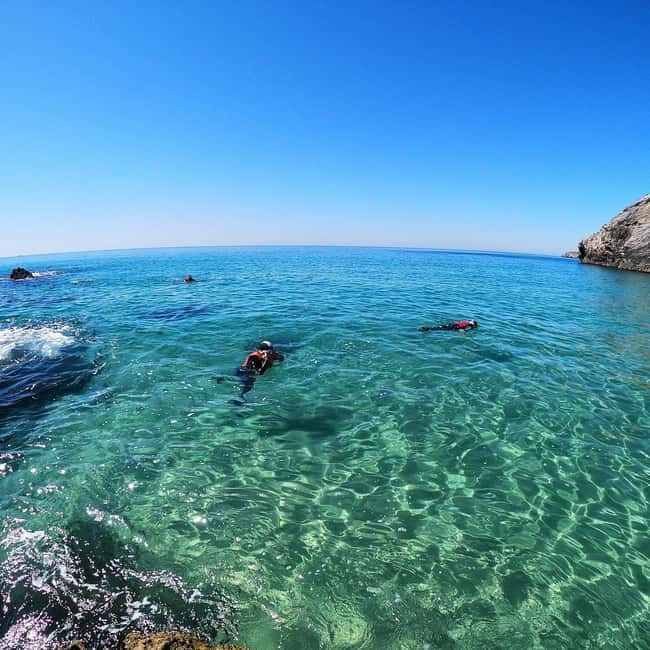
Between the main water sections, the schedule includes a short stop around Vila do Bispo e Raposeira for about 15 minutes. This functions like a reset moment: you get a brief stretch of land time, a chance to regroup, and a view of how the coast connects to inland villages.
Because the tour is built around moving between sea and rock, those short land breaks help your body stay steady. They also help your brain reset after the water segments.
I would treat this stop as useful breathing room, not as a sightseeing tour. If you want a long village visit, you will need a separate plan. Here, the point is to keep the energy focused and the route flowing.
Price and value: is $76 worth it
At $76 per person for a 4-hour activity, this sits in the “serious adventure” price zone, but you are not just paying for a guide. You are paying for a full system of safety, time in the water, and gear that would cost you on your own.
What you get for the price:
- qualified coasteering guide with lifeguard certificate
- total activity time of 4 hours, with about 3 hours in the water
- full protective equipment (wetsuit, helmet, buoyancy aid, boots, protective shorts)
- snorkeling goggles and snorkel
- pictures and videos of your jumps
- water and small snack
- mandatory insurance included
The photo-and-video part is a big practical value. When you are climbing and jumping, you cannot film yourself well. Having someone capture the action means you can actually remember it without handing your phone to a stranger.
Also, group size matters. Up to 14 participants keeps the experience controlled and lets the guide manage skills and jump choices. In adventure tourism, that kind of attention is usually what keeps the experience fun rather than chaotic.
If you are the type who likes active days and you want to see a rugged part of the Algarve that you cannot access casually, $76 can feel like a fair deal. If you want a relaxed beach swim with minimal effort, it will likely feel like too much money for too much work.
Who this tour fits best (and who should skip it)
This is not a casual tour. It has clear suitability limits, and they are there for your safety.
Not suitable for:
- children under 14
- non-swimmers
- people under 150 cm (4 ft 9 in) and also under 145 cm (4 ft 8 in) per sizing constraints
- people with low level of fitness
- people with heart problems
- people with back problems
- people with pre-existing medical conditions
- wheelchair users
So who should book?
- You are athletic enough to hike over rocks and handle short swims without panicking.
- You like water-based challenges and you are comfortable getting wet.
- You want active scenery, caves, and cliffside jumps in a small-group setting.
- You want a guide who can be patient if you are nervous, which shows up strongly in the reviews.
If you want a “learn new thing with coaching” adventure, this is one. The guided nature of the jumps and climbs means you are not just thrown into the deep end.
What to pack and how to avoid common mistakes
The included gear helps a lot, but you still need to bring the basics.
Bring:
- swimsuit
- sunscreen
- towel
That is it for the tour essentials, but I’ll add practical advice based on how these days go:
- Wear simple clothing you do not mind getting sandy and salty on.
- Avoid bringing anything valuable that could slip off in the water.
- If you get cold easily, trust the wetsuit kit. Still, think warm layers for after.
And psychologically, plan for nerves. If you are afraid of heights, you can still have a great experience. The guides are described as patient and encouraging, and you choose jump heights that match your comfort.
Should you book Sea Land Algarve coasteering?
If you like a hands-on sea adventure, you should seriously consider booking this. The biggest selling points are the small group, the high-quality safety setup, and guides like André, João, and Francisco who help people feel confident while keeping the whole experience moving.
Book it if you:
- want real adventure along the Vicentine Coast near Sagres
- enjoy climbing, swimming, and the occasional jump
- value getting action photos and videos without doing the filming yourself
- are okay with snorkeling being conditional on visibility
Skip it if you:
- are looking for a relaxed beach day
- are not a confident swimmer
- have mobility or medical concerns listed under the tour limits
- expect snorkeling to be the main event
If you are reading this and thinking, I can handle a challenge but I am a little nervous about the jumps, you are exactly the kind of person this is built for. Choose smaller jump heights first, follow the guide’s timing, and you will likely end the day with that surprised grin you only get from conquering something you didn’t plan to be brave about.
FAQ
How long is the activity, and how much time is in the water?
The tour lasts about 4 hours total, and it includes around 3 hours of water time.
Where does the tour start and end?
It starts with a safety briefing at Ingrina Beach. You also get pickup and drop-off around Lagos and Sagres, using the provided locations.
Is snorkeling guaranteed?
No. Snorkeling is only included if sea visibility conditions allow, and it is a smaller part of the overall coasteering experience.
What is included in the price?
The guided activity includes coasteering gear (wetsuit, buoyancy aid, helmet, boots, protective shorts, and snorkeling equipment), water and a small snack, mandatory insurance, and photos and videos of your jumps.
Do I have to jump from the highest cliffs?
No. Jumping heights can range from 1 meter up to about 11 meters, and you can choose what you feel comfortable doing.
Are kids allowed on this tour?
Children under 14 are not suitable for this coasteering tour. There is a Kids Coasteering Tour for younger participants.
What should I bring?
Bring sunscreen, swimwear, and a towel. The tour does not list sunscreen or a towel as included.
Is this tour for non-swimmers?
No. The tour is not suitable for non-swimmers.