REVIEW · LARNACA
Larnaca: Snorkelling Zenobia Wreck Plus Mini Cruise
Book on GetYourGuide →Operated by Zenobia Divers · Bookable on GetYourGuide
A giant Swedish ferry sits just offshore. In Larnaca, Zenobia snorkelling turns a history lesson into a see-it-with-your-own-eyes underwater show.
What I like most is the combo of an iconic wreck location and the chance to swim alongside real marine life near the structure. The second big plus is the snorkelling support: you get proper gear and an instructor on hand to help you make the most of your time.
One thing to think about first: sea conditions and where you’re able to surface-and-stay can affect how much of the wreck you actually get to see, especially if you’re hoping for a long, effortless swim at the top of the structure.
In This Review
- Key things to know before you go
- Meeting at the Larnaca fishing port and getting geared up
- Why the Zenobia ferry is such a powerful snorkel destination
- What you’ll actually see under the water (fish, structure, and artifacts)
- Snorkel time, sea conditions, and realistic expectations
- Instructor guidance and the value of a good briefing
- Equipment that helps you enjoy the wreck, not fight for it
- Marine life viewing: how to spot barracudas, groupers, and eels
- Price and what $17 gets you in Larnaca
- Who this tour suits best (and when you should reconsider)
- Should you book the Larnaca Zenobia Snorkelling cruise with Zenobia Divers?
- FAQ
- How long is the Zenobia Wreck snorkelling tour?
- What’s included in the price?
- Where do we meet for the tour?
- Do they provide an instructor and do they offer different languages?
- Is the group private?
- Is there free cancellation?
Key things to know before you go
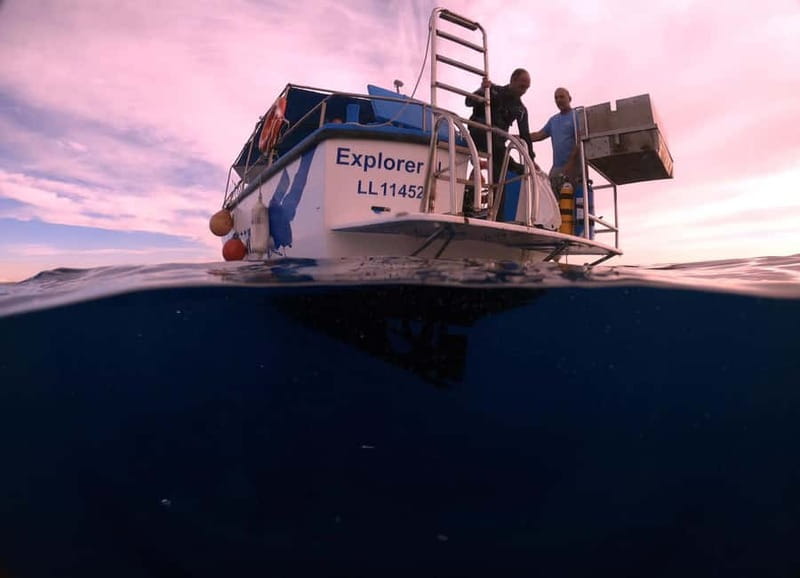
- The Zenobia ferry (sank in 1980) is famously well known and now an artificial reef
- 172 meters long and resting on its port side, creating a huge underwater structure to look at
- Snorkelling gear is included: wetsuit, mask, and snorkel, plus coffee and water
- You’re taught in multiple languages, with instruction offered in English plus many others
- Expect marine life like colorful schools of fish, barracudas, groupers, and moray eels
- Time in the water can vary with conditions, so plan around shorter swims if waves pick up
Meeting at the Larnaca fishing port and getting geared up
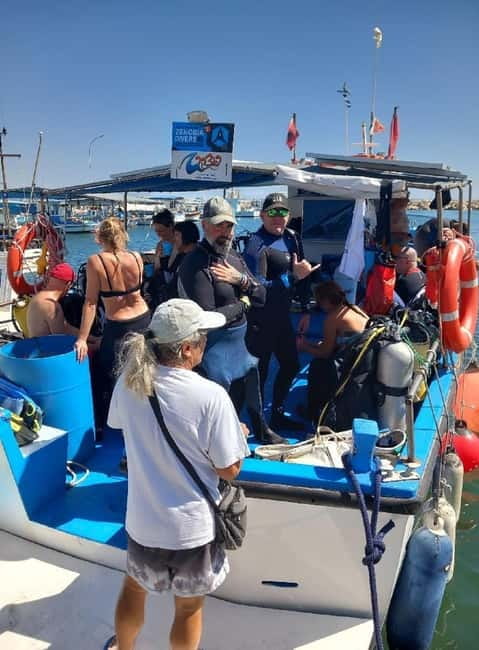
The tour starts with a simple meet-up: go to the area opposite ZEPHYROS FISHING RESTAURANT. From there, you’re connected with the boat at Larnaca Fishing Port, where the crew is loading up for the run out to the wreck.
This matters because you’re not just paying for a swim spot. You’re paying for the whole setup: the tour includes wetsuit gear, mask, and snorkel, plus coffee and water. That means you show up, get kitted, and you’re ready to focus on the water instead of problem-solving rental logistics.
Even if you’ve snorkelled before, I like that this is handled for you. A properly fitted mask and a wetsuit you can actually move in make your time underwater far more pleasant than fighting gear. And in choppy conditions, good fit helps you feel steadier.
You can also read our reviews of more boat tours in Larnaca
Why the Zenobia ferry is such a powerful snorkel destination
The Zenobia isn’t a small wreck you skim past. This Swedish ferry sank on its maiden voyage in 1980, and the ship now lies on its port side at a reported depth of 42 meters off Larnaca.
Underwater, that depth number is less about you personally swimming to the very bottom and more about what it signals: this is a big, established wreck. Over decades, hard surfaces and trapped spaces become a home base for fish. The structure provides cover, feeding zones, and consistent habitat, turning the wreck into a kind of artificial reef.
The size also changes your experience. A 172-meter-long hull isn’t a quick peek. You’re not just looking at a single wall; you’re working your way through an underwater environment that has scale. That scale is what makes this popular for both history fans and marine-life seekers.
What you’ll actually see under the water (fish, structure, and artifacts)
When the conditions are good, the Zenobia offers two types of thrills at once.
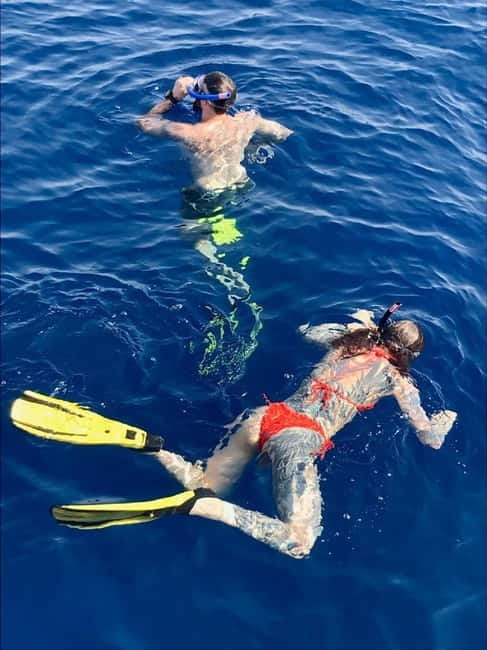
First: marine life. Near the wreck you can expect schools of colorful fish and larger residents such as barracudas and groupers. You may also spot moray eels, which tend to be the classic “spot them if you’re patient” sort of animal. If you love that moment when your brain clicks from water-surface to underwater world, this is exactly that kind of moment.
Second: the wreck itself. The Zenobia is described as having cargo decks and hull features that have changed over time. Depending on where you’re positioned, you’re in for views of big wreck details like massive propellers and remnants tied to what the ferry once carried.
Here’s how to make this work for you: don’t sprint through your snorkel time. Move slowly and let your eyes adjust. Wreck structure is busy. Fish are often grouped around edges, shadows, and breaks in the hull, so if you swim like you’re training for a race, you’ll miss the best stuff.
Snorkel time, sea conditions, and realistic expectations
The tour lasts 90 minutes to 2 hours total, and that includes the full rhythm: meeting, setup, boat ride, instruction, snorkel time, and return.
What can surprise people is how much snorkel time you actually get in open water. In calm conditions, you can make it feel like a proper underwater session. When waves build, it can become less of a relaxed float and more of a controlled swim where you prioritize staying comfortable and stable.
A practical way to think about it: this is snorkelling, not a “reach every part of the wreck” mission. Even though the wreck rests off the coast at a depth of 42 meters, what you’re able to see clearly at the surface can change with water movement, visibility, and where you enter the water.
So if your goal is maximum wreck visibility for every minute you’re in the water, pay attention to sea-day reality. If you’re the type who gets uneasy with swell, tell the instructor early. One traveler reported getting extra float support when conditions were rough, which is the smart move: safety first, fun second.
Instructor guidance and the value of a good briefing
The tour lists an instructor who speaks a range of languages, including English, Greek, Bulgarian, Czech, French, Hebrew, Latvian, Lettish, Polish, Russian, and Romanian.
That language detail is more than a checkbox. A clear briefing helps you do two important things fast:
- Get oriented quickly so you know where to look
- Learn how to snorkel comfortably without wasting energy
One caution: if you’re counting on a specific language, don’t assume it will be delivered exactly as requested in every situation. There’s at least one account of the experience being conducted in English even when Russian was expected. If language is a must, it’s worth confirming during booking or asking before you board.
Equipment that helps you enjoy the wreck, not fight for it
This tour includes wetsuits, masks, and snorkels. That’s a solid baseline, because fit is everything with snorkelling. A good mask seal means you can look longer without constant adjustments. A snorkel that works with your breathing rhythm reduces that subtle panic that sneaks in during choppier water.
The wetsuit also matters for comfort. Cold water isn’t just unpleasant; it shortens your attention span. When you’re comfortable, you stay curious longer, and curiosity is what turns a short snorkel into a memorable one.
And remember: you’re dealing with an underwater structure. That means you want control. Better equipment gives you control.
Marine life viewing: how to spot barracudas, groupers, and eels
The fish list is a great starting point, but sightings aren’t a vending machine. You usually see more when you slow down and watch what the wreck is doing.
Here’s what I recommend:
- Stay near structure edges where fish use cover
- Look for movement patterns—fish schools often signal where bigger fish cruise
- Give moray eels time: they’re typically seen when you pause and scan openings rather than rushing past
Colorful fish often show up in visible schools, while barracudas and groupers tend to be more about chance + patience. If visibility is strong, your odds improve because you can see deeper into the “shapes” around the wreck.
One account also praised the changing look of the water depending on depth. That’s real in coastal snorkelling: even small shifts in light and depth can make the sea look totally different. Use that as a cue—when the water color shifts, your eyes may be adjusting to better viewing.
Price and what $17 gets you in Larnaca
At $17 per person, this tour is priced like a local-friendly snorkel day rather than a premium “just because” experience. The value comes from what’s included:
- Wetsuit, mask, and snorkel
- Coffee and water
- Boat fees
When those items are rolled in, you avoid the common hidden costs of snorkel days. You’re also buying time with an instructor, which is hard to replace if you’re doing it solo.
The only time value drops is when expectations don’t match sea conditions. If waves limit your time in the water, you might finish thinking you wished you had more minutes. But that’s not unique to this tour—open-water snorkelling always carries a weather component.
Who this tour suits best (and when you should reconsider)
This is a great match if you want:
- An iconic wreck experience without needing scuba gear
- Marine life alongside the underwater structure
- Instructor help and included equipment
- A short day trip that doesn’t eat your whole afternoon
It’s less ideal if:
- You need lots of guaranteed time in the water regardless of sea state
- You’re expecting to see the wreck from very deep sections while staying at the surface
- Language matters so much that any deviation would ruin the experience
One traveler described the feeling of limited swimming time and not seeing the wreck clearly when it was much deeper than expected. That’s the kind of mismatch you can prevent by setting your mindset: you’re viewing the wreck from the snorkel zone, not touring the entire ship like a guided museum visit.
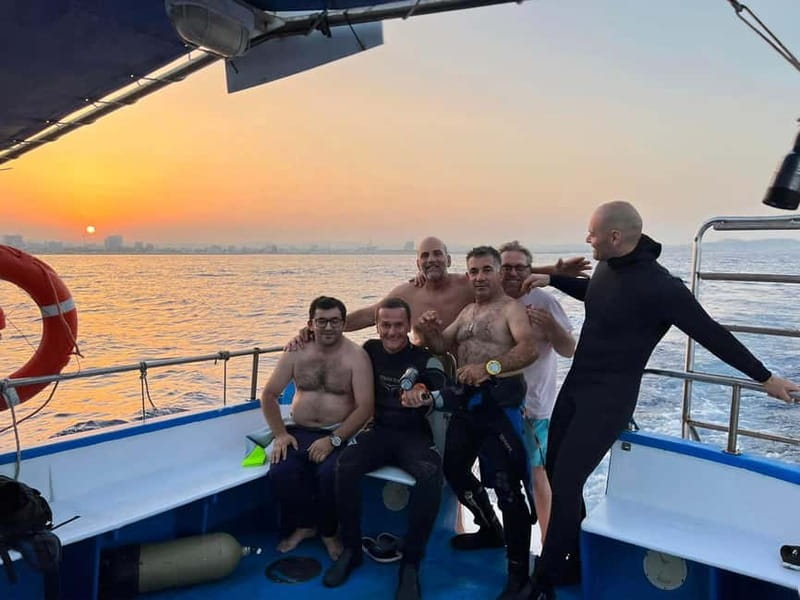
Also, while this is a private group booking type, there can still be a mixed load on the boat. One account noted the boat had many scuba divers while only a few snorkelers were in the water, which can change how much attention you feel you’re getting. If you prefer a snorkel-only vibe, it’s worth asking about the day’s setup.
Should you book the Larnaca Zenobia Snorkelling cruise with Zenobia Divers?
I’d book it if your dream is a world-famous wreck plus real fish life, and you’re happy to let the sea decide the exact shape of the day. The price is attractive for what’s included, and the wreck itself is on a scale that makes snorkelling feel more like exploring than just floating around.
Skip or reconsider if you’re highly sensitive to waves, you’re expecting very long snorkel time no matter what, or you need a specific language with zero chance of switching. In those cases, you might be happier choosing a plan that offers more control over conditions and communication.
If you’re flexible and you treat your snorkel time like an opportunity to slow down and look, you’ll likely come away with exactly what this tour is built for: shipwreck structure, fish at work, and a memorable underwater change of pace.
FAQ
How long is the Zenobia Wreck snorkelling tour?
It runs for 90 minutes to 2 hours, depending on the starting time and availability.
What’s included in the price?
The tour includes wetsuits, mask, and snorkel, plus coffee and water, and boat fees.
Where do we meet for the tour?
Meet opposite ZEPHYROS FISHING RESTAURANT, and the boat moors at Larnaca Fishing Port.
Do they provide an instructor and do they offer different languages?
Yes. The instructor speaks multiple languages including English, Greek, Bulgarian, Czech, French, Hebrew, Latvian, Lettish, Polish, Russian, and Romanian.
Is the group private?
The experience is listed as a private group.
Is there free cancellation?
Yes. You can cancel up to 24 hours in advance for a full refund.