REVIEW · ISOLA DISCHIA
Snorkeling among the Underwater Caves of Ischia Ponte
Book on Viator →Operated by Ans Diving Ischia · Bookable on Viator
Bubbles inside a cave beat a museum. I love the CO2 bubbles drifting up as you float just a meter or so down, and I also love how the route mixes the Green Grotto with real stop-and-learn storytelling under the surface. One catch: this is not for you if you get seasick, since you’ll be out on the water and doing boat transfers.
What makes this outing feel extra worth it is the way it turns snorkeling into a guided nature trail. You don’t just put on a mask and wander—you follow a route that links caves, marine life, and archaeological sights in a smooth 2.5-hour chunk. The group stays small (maximum 10), so you’re not fighting for space or trying to swim around strangers.
You’ll be using the provided snorkeling gear, and most people can take part as long as you can swim. Expect a “simple” setup (mask, mouthpiece, fins) plus a light for cave sections, and you may also get buoyancy help like wetsuits and even optional flotations if you need them.
In This Review
- Quick highlights
- Where Ischia Ponte’s caves start: the meeting point and boat time
- The $54.07 value: what you actually get for your time
- Snorkeling setup you’ll use: mask, fins, light, and buoyancy help
- Green Grotto: where the cave feels like a whole world
- Grotta del Mago: torchlit mystery and controlled excitement
- Cartaromana’s Ninfeo rock: archaeology you can see with your eyes
- Submerged 4th-century BC walls: ancient stone in everyday water
- Aragonese Castle seabed: the CO2 bubble phenomenon up close
- Guides, safety, and group size: how this stays comfortable
- What to wear and how to plan your day (practical, not fussy)
- Who should book this Ischia cave snorkeling tour
- Should you book Snorkeling among the Underwater Caves of Ischia Ponte?
- FAQ
- FAQ
- How long is the snorkeling tour?
- How much does the snorkeling tour cost?
- What’s included in the price?
- Do I need to know how to swim?
- Is the tour recommended if I get seasick?
- What group size and language should I expect?
Quick highlights
- CO2 emissions at shallow depth: see the gas phenomenon in front of Aragonese Castle, at less than a meter down
- Multiple underwater stops: Green Grotto, Grotta del Mago, Ninfeo rock in Cartaromana, and submerged Roman walls
- English-guided cave route: explanations are given in English along the way
- Small-group vibe: maximum 10 travelers, with careful pacing and safety support
- Torchlight moments: some cave sections may include torch-lit viewing, adding real drama
Where Ischia Ponte’s caves start: the meeting point and boat time
The experience begins at Via G. Rocca, 13, 80077 Ischia NA (the ANS team base in Ischia Ponte). From there, you reach the snorkeling points by boat in just a few minutes. That matters because it keeps the “water travel” portion short, so more of your time is actually spent in the caves and at the sites.
Timing can shift a bit. The total duration and return time may move based on preparation and boat transfers, so don’t plan a tight dinner reservation right after. The good news: the operation is designed for a 2 hours 30 minutes experience, and you’ll still get a full sequence of sites rather than a single long swim.
Location-wise, it’s easy to build into an Ischia day. The meeting point is near public transportation, which helps if you’re not driving or you want to keep parking stress out of the picture.
The $54.07 value: what you actually get for your time
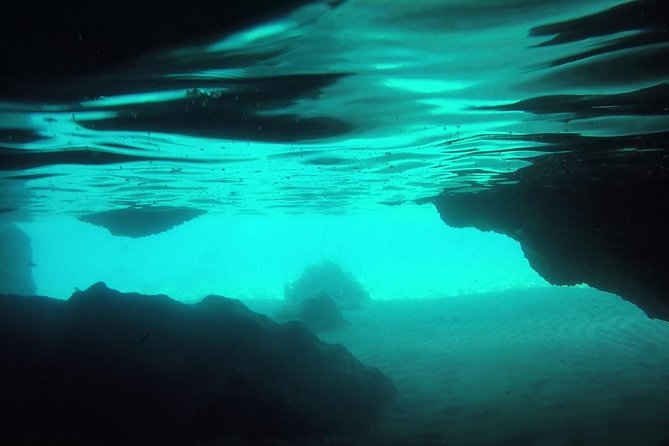
At $54.07 per person, you’re paying for a guided route through several underwater locations, not just “snorkel and hope.” The price includes snorkeling equipment, which is a real cost saver if you don’t want to track down gear before you arrive. And you’re paying for coordination too: small group size, boat transfers to multiple sites, and guidance in the water.
Not included is basic refreshment—snacks and soda/pop are on you. That’s the main “hidden” expense to remember if you tend to get hungry after a morning or afternoon activity. If you want to keep energy up, plan to grab food before or after, not during.
Also, the route isn’t purely sightseeing. You’ll get explanations that connect what you’re seeing to local marine life and nearby archaeological remains. That’s where this tour tends to feel like good value: you’re not just looking at water. You’re learning what you’re seeing.
Snorkeling setup you’ll use: mask, fins, light, and buoyancy help
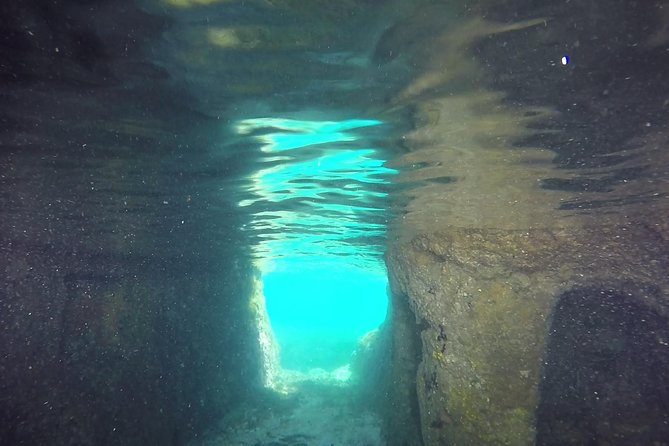
The tour is designed to be straightforward. You’ll use mask, mouthpiece, fins, and a light for cave sections so you can actually see inside darker areas. Equipment is included, and you don’t need to bring your own snorkel kit.
On top of that, expect wetsuits and buoyancy support. Guests have described wetsuits that help with flotation, and an optional flotation ring if you need extra help. That’s useful for beginners or kids who want confidence without feeling like they’re fighting the water.
One practical note: the tour asks that you know how to swim. That doesn’t mean you need to be an Olympic swimmer, but it does mean you should be comfortable staying afloat and moving with fins in open water and around cave entrances.
Green Grotto: where the cave feels like a whole world
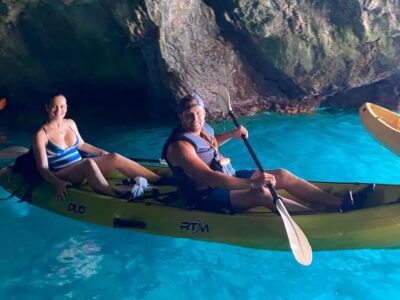
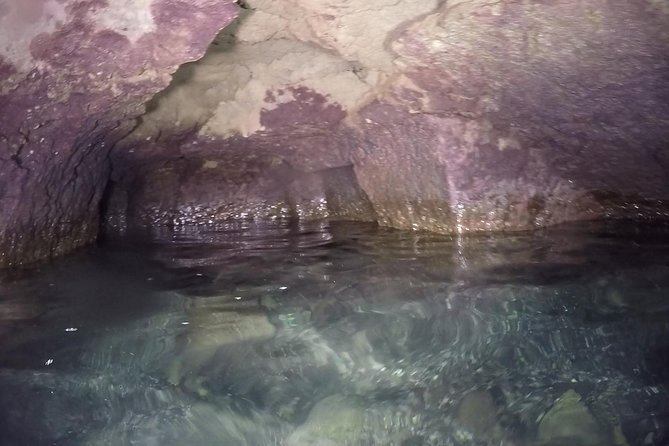
The Green Grotto is the kind of stop that makes snorkeling feel like something bigger than the shoreline. You’ll be guided through a nature trail among caves and sites of interest, and this location is typically the first big “wow” moment in the sequence.
What I like about how they handle this stop is pacing. Cave snorkeling can get stressful fast if you’re rushed. The guides keep things controlled and move at a pace that lets you actually watch the underwater details instead of just trying to keep up.
And because the light is part of the gear, you’re not stuck squinting. You can see the cave features better, and you can actually enjoy the transition from open water into enclosed space.
Grotta del Mago: torchlit mystery and controlled excitement
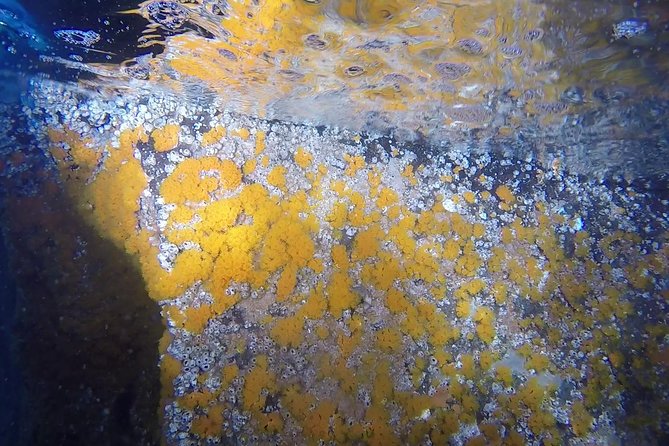
Grotta del Mago adds a different feel. This is where the tour leans into cave exploration more clearly—some runs include torchlight viewing, which changes the mood underwater. Torchlight can turn small rock textures and cave edges into something you can follow visually, not just swim past.
I also appreciate that the operation focuses on safety and comfort. In real-world terms, that means guides are paying attention to different comfort levels in the group. If you move slower, you don’t get left behind, and if you have kids in the water, the team can adapt the pace.
So if you’re someone who likes snorkeling but gets a little uneasy in tight spaces, this is a good fit. It’s not a chaotic free-for-all. It’s guided and structured, and the cave sections are treated like something to enjoy carefully.
Cartaromana’s Ninfeo rock: archaeology you can see with your eyes
Then the tour shifts from pure “pretty underwater” to something more rare: visible archaeology. You’ll snorkel near the archaeological area of the Ninfeo rock in Cartaromana, where you can look at submerged structures connected to ancient life around the island.
What makes this stop valuable is the pairing of history and biology. You’re still in the water with fish and rock shapes, but you’re also getting context for what you’re seeing: how the coastline and human activity from long ago relate to the present seafloor.
That blend matters, because it turns your snorkeling from a single visual experience into a story you can follow. Even if you’re not a trivia person, it helps your brain lock onto landmarks underwater, which makes the time feel more meaningful.
Submerged 4th-century BC walls: ancient stone in everyday water
Part of the route includes the submerged walls from the 4th century BC. This is one of those stops that makes snorkeling feel unusually grounded. You’re not looking at a theme park version of the past. You’re seeing old construction sitting where sea and time have shaped the surface around it.
A drawback? It can be easy to miss these details if you’re focused only on fish. In caves and rocky areas, you sometimes need a moment to slow down and let the guide’s cues land. If you’re the type who swims too fast, try to keep your rhythm steady so you get the full point of this stop.
But if you do slow down a touch, it’s rewarding. You’ll leave with the sense that Ischia isn’t just cliffs and towns. It has deep layers you can see from inside the water.
Aragonese Castle seabed: the CO2 bubble phenomenon up close
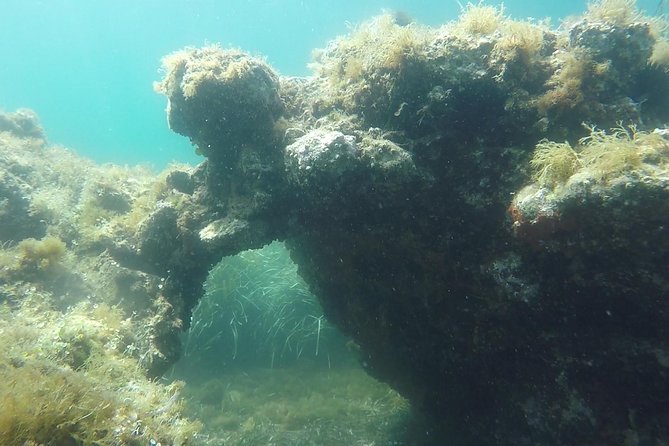
This is the stop many people remember. In front of the Aragonese Castle, you can observe gaseous emissions at very shallow depth—less than a meter down. As you snorkel, you may see CO2 bubbles rising from the seabed. The effect is strangely beautiful and a bit surreal, like swimming through underwater light choreography.
What I like is that it’s not “science lecture only.” You’re watching the phenomenon with your own eyes, at a depth that’s close to the surface. That reduces the intimidation factor compared to deeper-water experiences.
There’s also a practical benefit: shallow depth means you don’t need to be at extreme comfort levels in the water. It still requires swimming ability, but the sensation is more about observation and calm movement than depth control.
Guides, safety, and group size: how this stays comfortable
The tour caps at a maximum of 10 travelers. That number is small enough to matter. It helps the guides keep track of everyone, supports safer pacing, and makes it easier to regroup after cave sections.
Safety shows up in how they handle different confidence levels. Guests have described scenarios where guides stayed close for kids who were moving more slowly, and where at least one guide remained behind while everyone progressed step-by-step. Others noted that when people moved to new spots, some staff stayed on the raft with children while the group snorkeled.
That kind of attention is what turns “snorkeling” into “a fun day without stress.” You’re guided, your equipment is handled, and the team watches for comfort so you don’t end up panicking in or around caves.
What to wear and how to plan your day (practical, not fussy)
You’ll want to show up ready to get in the water. The tour provides snorkeling equipment and buoyancy support, so your main focus should be being comfortable physically and mentally with being in the sea.
Plan your day around that 2 hours 30 minutes block. Because return time and total duration can shift due to prep and boat transfers, keep a little breathing room afterward. This also helps if you’re traveling with kids, since cave snorkeling often takes a few minutes for everyone to settle in.
Food-wise, remember snacks and soda/pop aren’t included. If you tend to get hungry after water time, grab something before you go, and keep your post-tour meal flexible.
And if you’re prone to seasickness, take that seriously. The tour is not recommended for those who suffer from seasickness, so it may be better to choose a different activity rather than gamble on feeling fine.
Who should book this Ischia cave snorkeling tour
This is a strong choice if you want an Ischia snorkeling experience with structure and variety. You’ll get multiple cave and site visits in one outing, plus explanations in English that connect what you see to marine life and archaeology.
It also fits families—at least it tends to, based on the way guides have supported kids of different confidence levels. If your group includes younger swimmers, the small group size and the careful pacing are exactly what you want.
I’d also book it if you’re a curious “tell me what I’m seeing” person. The route isn’t only scenic; it’s interpretive. Guides include marine-biology-style context, and some people have even mentioned having a marine biologist guide with deep understanding of the local area.
If you hate boats, fear caves, or get seasick easily, then skip it. The water time and cave sections are part of the point.
Should you book Snorkeling among the Underwater Caves of Ischia Ponte?
Yes, if you match the basics: you can swim, you’re comfortable in open water and cave entrances, and you want a guided route through several underwater sites rather than a single stop. The small group size (max 10) plus careful pacing and safety-minded guiding make it a calmer option than many bigger-water tours.
Also, this is a particularly good value when you want both beauty and context. You’re not paying just for time in the water; you’re paying for a sequence that includes caves, submerged archaeology, and the CO2 bubble phenomenon in front of Aragonese Castle.
Skip the tour if seasickness is your weak spot, because the tour is not recommended for that. And if you expect a “no-effort” experience where you won’t need to move with fins and stay afloat, you’ll likely feel limited.
FAQ
FAQ
How long is the snorkeling tour?
The duration is approximately 2 hours 30 minutes.
How much does the snorkeling tour cost?
It costs $54.07 per person.
What’s included in the price?
Snorkeling equipment is included.
Do I need to know how to swim?
Yes, it’s important to know how to swim for this activity.
Is the tour recommended if I get seasick?
No, it is not recommended for people who suffer from seasickness.
What group size and language should I expect?
The tour has a maximum of 10 travelers, and it’s offered in English.