REVIEW · BONAIRE
Clearbottom Mangrove Kayak & Snorkel tour
Book on Viator →Operated by Royal Activities Bonaire · Bookable on Viator
Kayaking through mangrove roots feels like science class. On this Lac Bay tour from Lac Cai Beach, you paddle in a clear-bottom kayak, then snorkel in mangrove tunnels where you can spot fish and sponges. I love that you get both the mangrove viewing and the water time, and my only real caution is the mosquitoes—plan repellent and clothing before you go.
I also love how much attention you get. The group is capped at 15 travelers, and the setup is practical: sit-on-top kayaks with a backrest, a dry bag for your stuff, bottled water, and soft drinks, plus fruit punch and a Dutch stroopwafel on the way back. Guides like Yuri, Stan, and Summer keep the tone friendly and the trip moving at a comfortable pace.
In This Review
- Key things to know before you go
- Why Lac Bay mangroves are worth a clear-bottom kayak
- Getting to Lac Cai Beach and the meeting point reality
- Paddling in a sit-on-top clear-bottom kayak: what that gear really means
- The mangrove route: what happens while you paddle
- Snorkeling in mangrove tunnels: what to expect (and what to skip)
- Marine park fees and the Stinapa nature tag: the final price math
- Guides make the difference: Yuri, Stan, Summer, and the style you’ll feel
- What to pack: turn “mosquito breakfast” into a manageable nuisance
- Timing, pace, and why the trip can feel longer than you expect
- Who should book this tour (and who should think twice)
- Should you book Clearbottom Mangrove Kayak & Snorkel?
- FAQ
- How long is the Clearbottom Mangrove Kayak & Snorkel tour?
- What is included with the $59 per person price?
- Are marine park fees included in the price?
- Do I need a Stinapa nature tag?
- How many people are in a group?
- Is pickup available?
- Where is the tour meeting point?
- What snorkeling should I expect in the mangroves?
- What should I bring for comfort?
- What is the cancellation policy if weather is bad?
Key things to know before you go
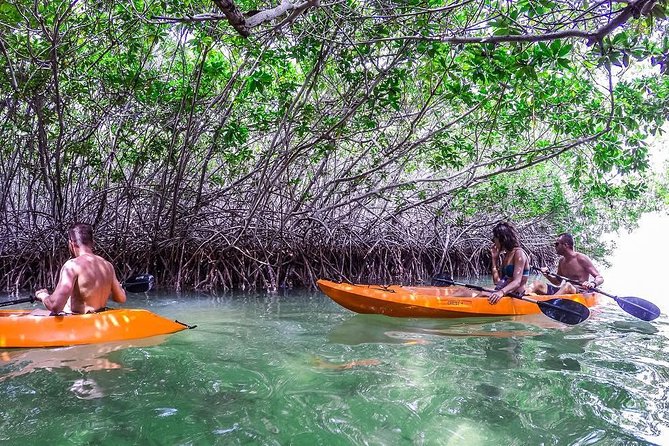
- Lac Cai Beach is the start point with calm water for paddling before you head into the mangroves.
- Glass-bottom kayak viewing helps you watch roots and small marine life from above.
- Snorkeling happens in mangrove tunnels and is usually shallow and murky, not a crystal-clear reef swim.
- Groups are capped at 15 for real guide attention instead of a crowded shuffle.
- Food and drinks are included: water, soda/pop, fruit punch, and Dutch stroopwafel.
- Marine park fees are separate and non-cruise visitors need a Stinapa nature tag (except children under 13).
Why Lac Bay mangroves are worth a clear-bottom kayak
Bonaire’s mangroves aren’t just “pretty trees by the water.” They’re living nurseries where plants, animals, and fish connect in a tight system—so the best way to see them is slowly, from the water, with time to look at details.
This is exactly what the clear-bottom kayak format does well. Instead of skimming past the shoreline, you’re able to see down into the water while you paddle, which makes the whole ecosystem feel more real. Then the snorkeling in the mangrove area adds a second viewpoint—surface-to-root life, and life just below your mask.
You can also read our reviews of more tours and experiences in Bonaire.
Getting to Lac Cai Beach and the meeting point reality
Your tour starts at the Bonaire North and South Pier area, and it ends back there. If you want pickup, it’s possible between Hamlet Oasis and Delfins when you book it, and you’ll need to ask through WhatsApp at +5997828219.
One practical detail: getting to Lac Cai Beach can involve a rougher road and a bit of “last stretch” walking or turning points once you’re close. Pack patience. If you arrive early, you’ll have fewer stress moments while you get your gear sorted.
Also, you’re dealing with a sunny island morning. You’ll be standing around at least a little before you launch, so it’s worth having your hat and sunscreen on hand.
Paddling in a sit-on-top clear-bottom kayak: what that gear really means
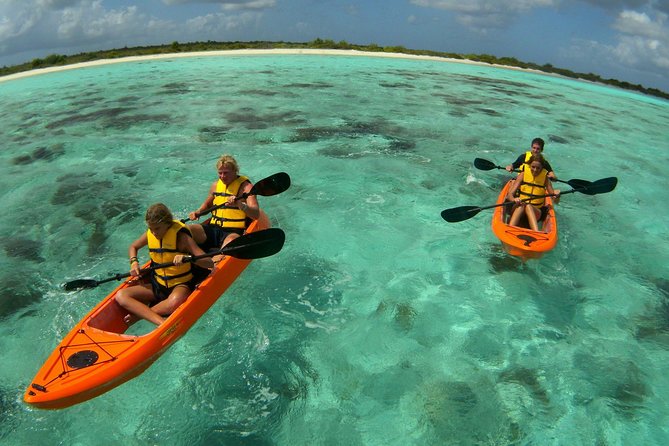
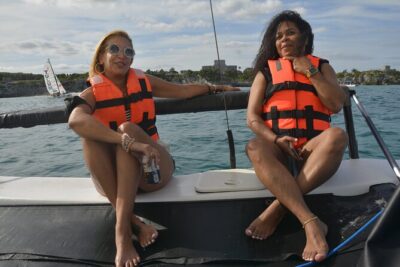
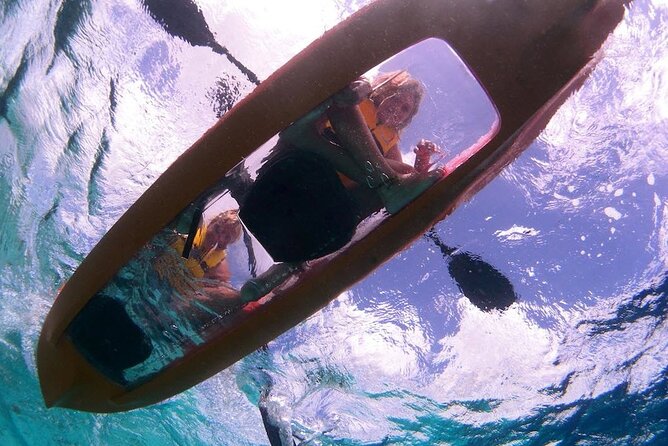
The kayaks are stable and designed for viewing—glass bottoms, a backrest seat, and paddles sized for comfortable control. You’ll also get a waterproof bag and/or dry bag to keep your personal items dry (this matters more than people think, because you’re going to be near splash zones and moving water).
Hydration is built in. You’ll have bottled water and soft drinks during the paddling portion, and the trip doesn’t feel like you’re expected to “tough it out” with nothing to drink.
What makes this kayaking setup feel good for most people:
- Sit-on-top style tends to be easier than gear that feels tippy.
- The backrest helps on a trip that includes getting in and out of the kayak.
- Clear bottoms give you a reason to slow down and look, not just paddle.
There can be some physical effort too. Plan on some grunt work like lifting or shifting kayaks and stepping around during setup, and wear shoes you don’t mind getting sandy or wet.
The mangrove route: what happens while you paddle
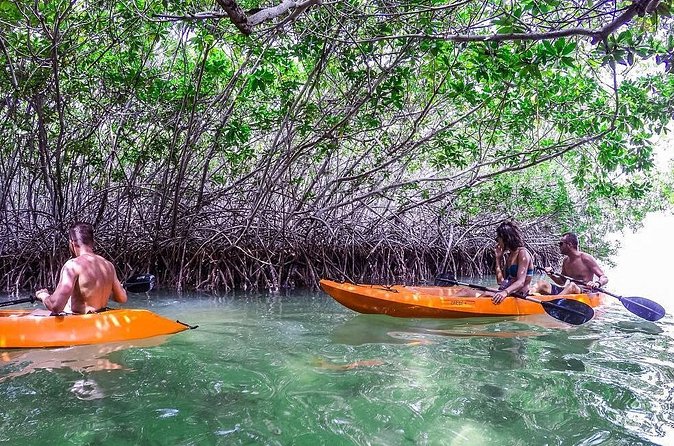
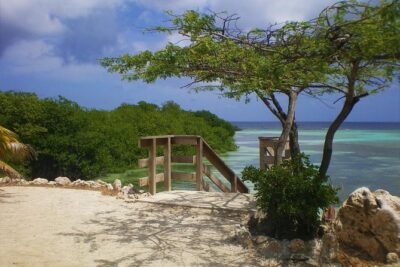
You start at Lac Cai Beach in Lac Bay National Park and head into the calm waters first. That “warm-up” stretch is a plus. It gives you time to get the rhythm before the mangrove corridors narrow and the scenery changes.
Once you’re in the mangroves, you’re not just passing trees. You’re moving through a system shaped by roots, shelter, and shallow water. This is where you’re most likely to spot small sea life and see how fish use the mangrove structure for cover.
Expect the guide to talk as you go. Guides such as Yuri and Stan are known for sharing facts, funny stories, and a steady flow of information about the mangrove system—trees, animals, and how the water movement and food sources connect.
Snorkeling in mangrove tunnels: what to expect (and what to skip)
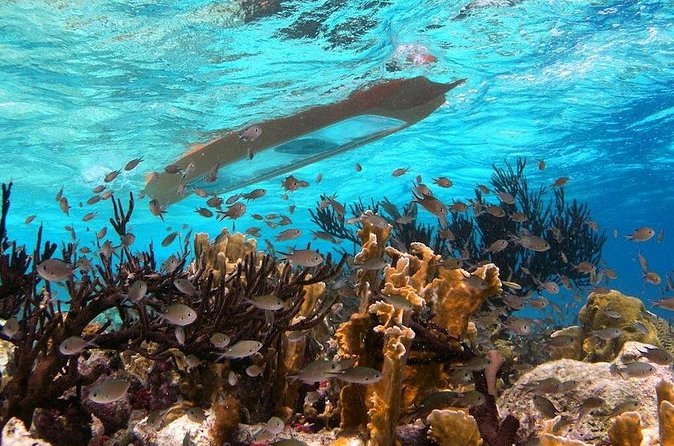
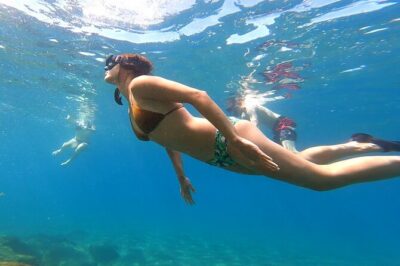
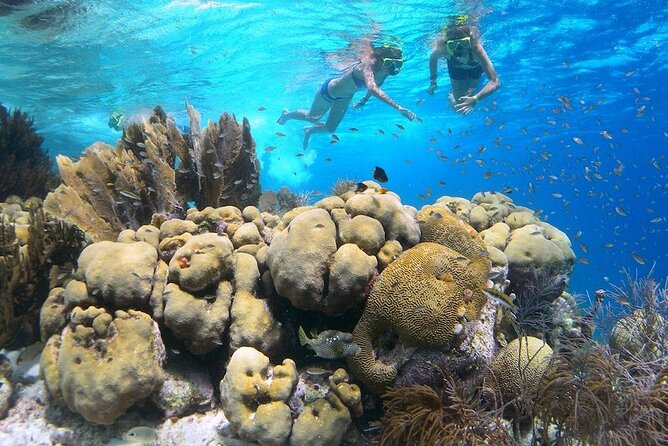
Here’s the honest expectation-setting: the snorkeling portion is in the mangroves, and it can be shallow and cloudy. That means you’re not signing up for classic coral reef snorkeling with long-distance visibility.
Instead, you’re snorkeling through mangrove tunnels and among mangrove roots where the environment is more sheltered. That’s a different kind of snorkeling: shorter, murkier, and very focused on the mangrove ecosystem itself. On some days, visibility is limited enough that the snorkeling can feel more like a swampy swim than a reef outing.
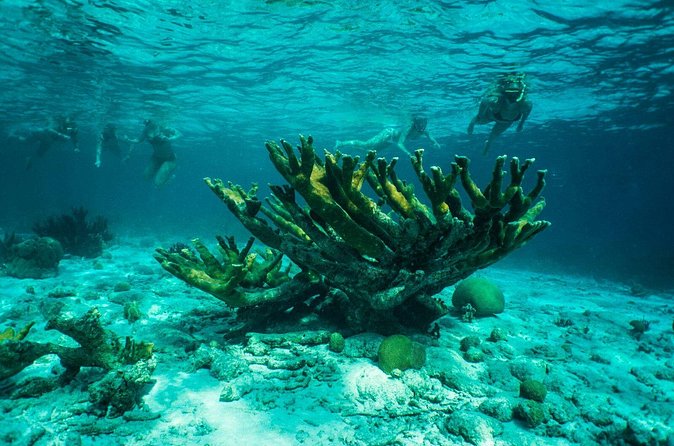
Still, that’s not automatically bad. It can be a cool trade. You’re there to see life using mangrove roots as habitat. One of the strongest recurring themes is that people enjoy the uniqueness—mangrove sponges in color (orange, purple, yellow, and blue have been seen) and small fish activity around the roots.
Also, mosquitoes are a real factor during this part. Even if you get a “quick in, quick out” snorkeling segment, the timing matters and bites can add up fast.
Marine park fees and the Stinapa nature tag: the final price math
The tour price is $59 per person, but it excludes marine park fees. The good news is that cruise ship passengers often have marine park fees covered, while non-cruise visitors usually need to purchase access.
The big detail for most people: a Stinapa nature tag is mandatory for everyone except cruise passengers and children under 13. You should treat this as a “check before you arrive” item, because it affects what you pay in total.
If you’re comparing this to other Bonaire water tours, the value is strongest when:
- You factor in snorkeling gear and guided access.
- You include that you’re getting both kayaking and snorkeling, not just one.
- You remember there’s a capped group size that helps the experience feel more personal.
Guides make the difference: Yuri, Stan, Summer, and the style you’ll feel
Bonaire tours live or die by the guide’s ability to keep you calm, safe, and curious. This one has a strong pattern: guides like Yuri and Stan (and also Summer) combine instruction with humor, and they keep you moving at a pace that feels workable.
You’ll typically get:
- Safety and technique tips for paddling and gear use.
- Explanations of mangrove species and how the ecosystem functions.
- A “fact vs. fiction” style of storytelling, plus local observations and sightings.
Some guides also adapt for physical needs, which is a big deal on an active water tour. If you have mobility limitations, ask questions early and mention what feels hardest for you.
What to pack: turn “mosquito breakfast” into a manageable nuisance
This tour has two weather realities: bright sun and mosquitoes. The best defense is to prepare before you reach the protected area.
Bring:
- Bug repellent you can apply before the tour begins (mosquitoes can be intense).
- Long sleeves and a hat if you burn easily.
- Water shoes so you’re not relying on flip-flops around wet steps and rocky edges.
- Sunscreen, and a towel or something similar to help with sun on legs.
One tricky rule shows up in real-life guidance: you may not be able to carry sunscreen or insect repellent containers into the protected area. So apply early, before you’re told to lock down what you can bring in.
And if you’re prone to bites, treat this as a “serious repellent day,” not a casual try-it-once day.
Timing, pace, and why the trip can feel longer than you expect
The duration is listed at about 3 hours. In practice, you’ll spend a lot of that time switching modes: meeting, prep, paddling, gear changes, snorkeling, and then getting settled again.
One detail that can surprise people: the kayaking can take longer than expected, even when the snorkeling is short. Plan for a steady morning commitment, not a quick “half hour in the water and done” outing.
If you’re sensitive to heat, bring a little buffer in your plan. You might be standing in the sun before departure or during waits.
Who should book this tour (and who should think twice)
This tour is a great fit if you want something off the standard reef routine. I’d point you to it if you like:
- Ecosystems that aren’t just coral and fish.
- Clear-bottom viewing where you can actually watch what’s happening under the surface.
- A calm, scenic paddle in Lac Bay with guided explanation.
It may be less ideal if you want:
- Clear, bright reef snorkeling with big visibility.
- A “no bug” experience. Mosquitoes are a common pain point here.
It’s also a good family-style outing for people who can manage getting in and out of kayaks. There are cases where kids and pregnant women have done it successfully, but you still need to be honest about your comfort with water, sun, and the small physical tasks around gear.
Should you book Clearbottom Mangrove Kayak & Snorkel?
I think you should book this if your idea of a great water day includes mangroves and you’re happy trading open-water reef visibility for a more unique, root-and-tunnel snorkeling setting.
You’ll likely get the best value if you:
- Come prepared for mosquitoes and strong sun.
- Want a guided explanation of how mangroves work, not just photos.
- Are okay with snorkeling that’s short and in shallow, sometimes murky water.
One last “decision help” tip: if you’re the type who gets disappointed by low visibility snorkeling, you might feel let down. If you’re the type who loves weird, specific ecosystems and seeing life in places most people skip, this is a smart choice.
FAQ
How long is the Clearbottom Mangrove Kayak & Snorkel tour?
The tour is about 3 hours (approx.), including the kayaking and snorkeling time.
What is included with the $59 per person price?
Snorkeling gear, bottled water, soda/pop, a dry bag, and a snack after kayaking (fruit punch and a Dutch stroopwafel) are included.
Are marine park fees included in the price?
No. Marine park fees are excluded. Cruise ship passengers usually have them covered, and non-cruise visitors need to purchase them.
Do I need a Stinapa nature tag?
Except for cruise passengers and children under 13, having a Stinapa nature tag is mandatory.
How many people are in a group?
The tour caps the group at a maximum of 15 travelers.
Is pickup available?
Pickup is possible between Hamlet Oasis and Delfins if you book it. You can ask via WhatsApp at +5997828219.
Where is the tour meeting point?
The meeting point is the Bonaire North and South Pier, and the tour ends back at that same meeting point.
What snorkeling should I expect in the mangroves?
Snorkeling happens in the mangrove area (including tunnels). Water can be shallow and murky, so it is not the same as classic reef snorkeling.
What should I bring for comfort?
Bring water shoes, sunscreen and a hat/long sleeves, and bug repellent since mosquitoes are common. A towel can also help.
What is the cancellation policy if weather is bad?
You can cancel for a full refund up to 24 hours in advance. If the tour is canceled due to poor weather, you’ll be offered a different date or a full refund.