REVIEW · NUSA PENIDA
Snorkeling and Freediving Trip around Nusa Penida
Book on Viator →Operated by Freedive Nusa · Bookable on Viator
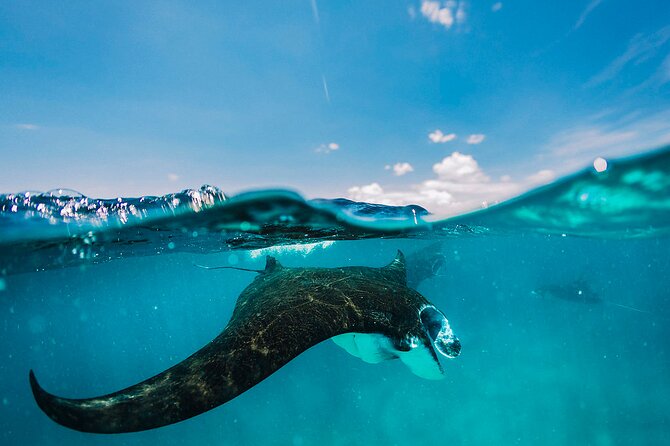
Manta rays first is a smart way to plan Nusa Penida. I like that this tour starts with an early run to Manta Point so you have a better shot at seeing manta rays before the usual crush of boats. The big win here is the focus on timing plus hands-on in-water guidance from the Freedive Nusa team.
I also like that you get the gear and the coaching up front. You’ll meet at Freedive Nusa at 10:00 am, get wetsuit and fins (long fins if needed), and receive a safety and manta-rules briefing before you even step into the water. One thing to keep in mind: manta sightings aren’t guaranteed, and if conditions are rough, you’ll still be swimming in open ocean.
In This Review
- Key Things That Make This Trip Worth Your Time
- Manta Point Timing: Why Starting Early Changes Everything
- Gear and Instructor Briefing: What “Professional” Looks Like Here
- The Full 4-Hour Flow: Meet, Boat, 3 Stops, Back Again
- Stop 1: Manta Point Swim With a Rules-First Approach
- Stop 2: Toyapakeh Wall Coral Gardens and Schooling Fish
- Stop 3: SD Point Drift for Reef Views and Turtle Odds
- Choppy Water Reality: Seasickness, Light Breakfast, and Open-Ocean Confidence
- Meeting Point Setup: Freedive Nusa Facilities You’ll Actually Use
- Price and Value: What $60 Includes (and What It Doesn’t)
- Who Should Book This Nusa Penida Snorkeling Trip?
- Should You Book It?
- FAQ
- Where do I meet for the trip?
- What time does the snorkeling trip start?
- What’s included in the price?
- How long does the tour last?
- Is a transfer from Bali to Nusa Penida included?
- Do I need to arrange transportation to the meeting point?
- Are manta rays guaranteed?
- What snorkeling spots will you visit?
- What should I do if I get seasick?
- How big is the group?
- What if weather changes the route or timing?
Key Things That Make This Trip Worth Your Time
- Early arrival to Manta Point for a better chance at manta rays
- Small group size (max 12) with instructors riding out on the boat
- Practical gear setup (wetsuit + fins if needed) plus a real safety briefing
- Three different underwater moods: mantas, coral walls, then a relaxed reef drift
- Seasickness support: they provide pills and advise a light breakfast
Manta Point Timing: Why Starting Early Changes Everything
If you care about manta rays, the timing matters more than most people expect. This trip is built around an early start, meeting at Freedive Nusa at 10:00 am, with the goal of reaching Manta Point before most Bali boats are settled in. In plain terms: the earlier you arrive, the more likely it is that the mantas are feeling calm and feeding without constant boat pressure above them.
There’s also a practical side to this. Being earlier often means the water feels more manageable when you enter—less jostling on the surface, fewer swimmers clustered around the same drop-off, and less time wasted waiting for a clear window. You’ll still need to play it smart in the water, but the overall flow tends to feel smoother when the crowd hasn’t peaked yet.
One key detail: if mantas aren’t present at Manta Point on that day, the crew tries to locate them at the other spots. That’s not a promise—nature runs the show—but it’s better than treating manta rays as a one-stop ticket.
You can also read our reviews of more snorkeling tours in Nusa Penida
- ️Nusa Penida by Private Boat – Snorkeling 4 spots, Swim with Mantas + Land Tour
★ 5.0 · 6,424 reviews
Gear and Instructor Briefing: What “Professional” Looks Like Here
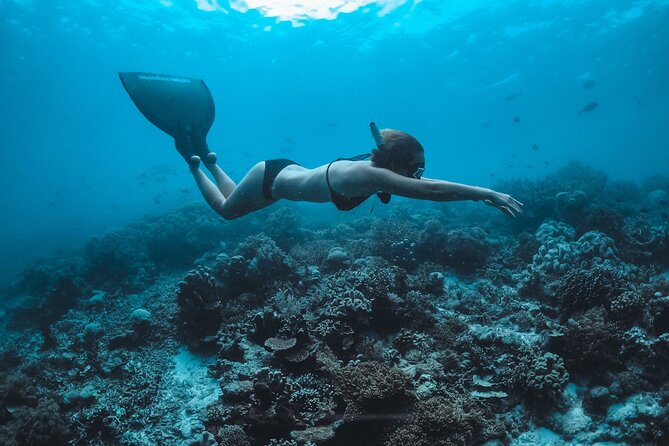
You’re not just handed a mask and told good luck. This is a guided setup where the team explains what to do and what not to do before you go in.
You get snorkeling equipment, or freedive gear depending on your choice, plus wetsuits and fins if needed. The tour also includes long fins when appropriate, which matters because Nusa Penida’s current and entry conditions can make efficient kicking a lot easier than flailing. Even if you’re a confident swimmer, having the right fin style helps you stay balanced and reduce effort.
Before the first swim, Freedive Nusa provides a detailed briefing covering:
- how manta rays behave
- rules of interaction (so you don’t crowd or stress animals)
- safety expectations for the day
I love that they treat safety as part of the experience, not an afterthought. The “know before you enter” approach makes the whole thing feel more controlled—especially in open ocean where conditions can change fast.
From the reviews, a theme shows up: people appreciate calm, reassuring guidance—especially when it’s their first time doing anything manta-related in Penida waters. One guide name that comes up is Gaston, and that matters because it suggests consistent coaching, not just a one-time handoff.
The Full 4-Hour Flow: Meet, Boat, 3 Stops, Back Again
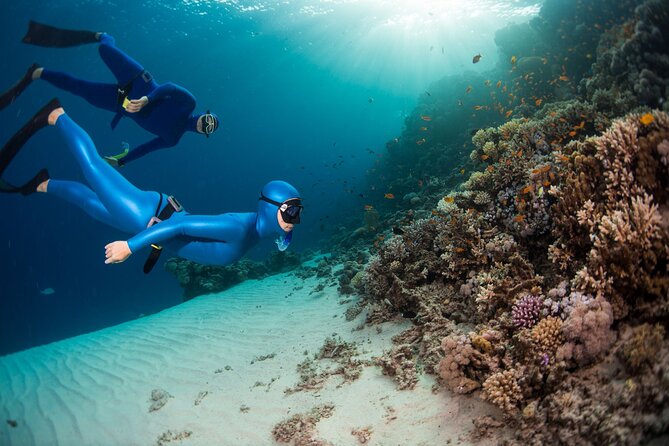
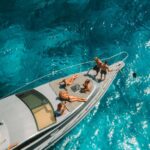
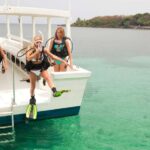
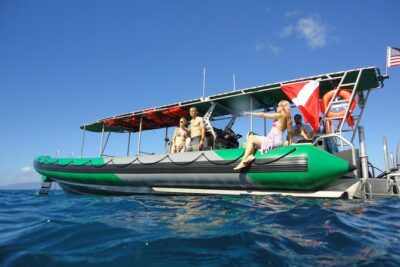
Plan around about 4 hours total. The rhythm is simple and efficient: meet at Freedive Nusa, get fitted with gear, do the briefing, then hop on a speedboat right from the school.
You also have two “small group” realities working in your favor:
- Maximum of 12 travelers
- Freedive Nusa instructors are in the water as in-water guides
That combination usually helps with pacing and safety. You’re not sprinting from one spot to another with a large crowd; you’re following a crew that can manage entries, exits, and spacing.
Weather and tides can affect the exact schedule. The route and meeting time might be adjusted based on conditions, so don’t treat your day like a rigid clockwork machine. Build in buffer time so you’re not rushing to a change.
Stop 1: Manta Point Swim With a Rules-First Approach
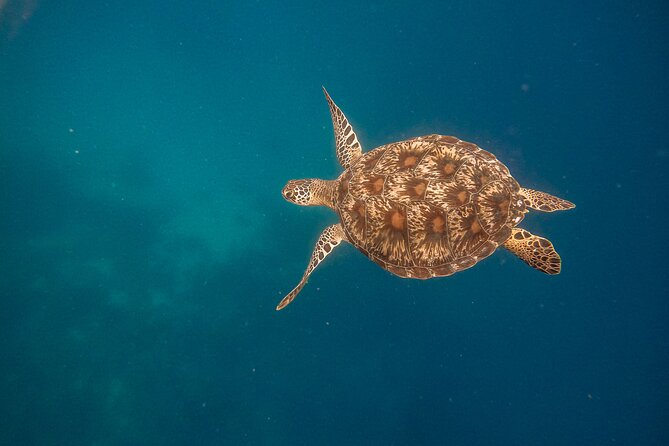
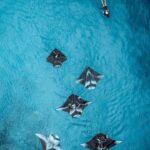
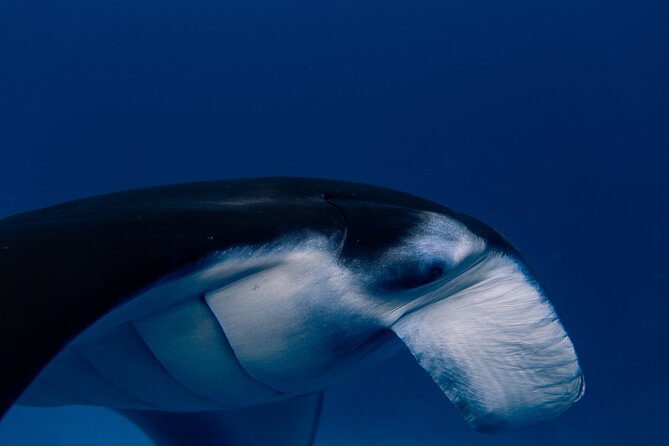
Manta Point is the headline, and it lives up to the hype. This is where you swim and snorkel with manta rays when they’re around—an experience that feels different from typical reef snorkeling because you’re watching a large animal behave naturally in its feeding zone.
What you should expect:
- You’ll enter with guidance and manta interaction rules already explained
- You may need to adjust your position and breathing based on how mantas move
- If mantas aren’t there, the crew works to find them at the other stops
The tour also notes that if there are no mantas at Manta Point, they’ll try other locations. That matters for your decision-making. You’re paying for a hunt strategy with multiple chances, not a single-location gamble.
One drawback to be honest about: if the water is choppy, visibility and comfort can drop. Manta rays might still be present, but the surface experience can feel more intense than on calmer days. That’s not a fault of the crew—it’s Penida.
Stop 2: Toyapakeh Wall Coral Gardens and Schooling Fish
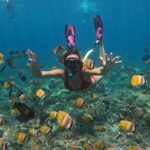
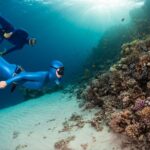
After the manta-focused first stop, the tour shifts into a more relaxed, coral-and-fish style underwater visit at Toyapakeh Wall. This is where you’ll see a wall-like reef structure with colorful corals and lots of tropical fish.
Why this stop is valuable even if you’ve already seen mantas:
- It gives your body a break after an attention-heavy manta swim
- It lets you focus on reef detail and fish behavior
- It’s a different type of snorkeling—less about a single big encounter, more about steady underwater scenery
If you care about photos, this is often the part that lets you slow down. Fish activity around coral structure tends to be constant, so you’re not waiting for an animal to appear.
A small caution: coral areas can mean you’ll want to keep buoyancy controlled. The briefing and gear fit matter here because you don’t want to kick up sand or drift into the reef.
Stop 3: SD Point Drift for Reef Views and Turtle Odds
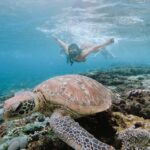
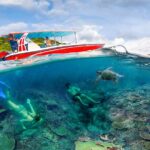
The last stop is SD Point, described as a relaxed drifting along a shallow reef slope. The big idea is low-stress movement: you drift along rather than fight the water the whole time.
This stop comes with two expectations:
- You’ll snorkel over coral-covered shallow areas
- You have a high chance of seeing turtles
Drift snorkeling is also a good match for mixed experience levels because you can let the water do part of the work. If conditions are rough, drift styles can still be uncomfortable, but the plan is at least designed for easier scanning and calmer movement along the reef.
Even if you don’t see a turtle, you’re still getting reef time, and that’s a big part of why manta trips can feel “complete” rather than one-and-done.
Choppy Water Reality: Seasickness, Light Breakfast, and Open-Ocean Confidence
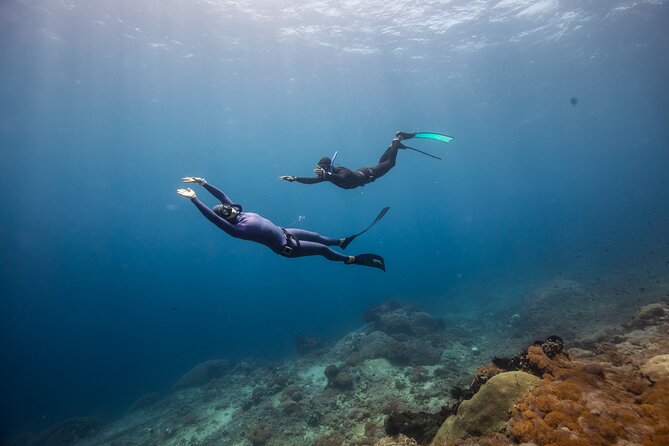
Nusa Penida can be gorgeous, but it can also be rough. This tour explicitly warns that the water might be very choppy and that you must be confident enough to swim in open ocean.
Here’s what you should do to stack the odds in your favor:
- Have a light breakfast in the morning
- Take seasickness pills they provide
- Be honest about your comfort level in open water
The reason I’m stressing this: manta rays are only half the equation. If the surface is rolling and you’re uncomfortable, you’ll spend the whole trip fighting anxiety or motion instead of watching fish and mantas.
Also, because the route and meeting time might shift with weather, don’t arrive expecting everything to stay identical. If conditions are rough, the crew still tries to run the best possible plan—this is wild nature, not a controlled aquarium.
If you’re new to open ocean swims, this is the part where you should pause and assess yourself honestly. Confident swimming isn’t just about being able to swim in calm conditions; it’s about staying calm when waves push you around.
Meeting Point Setup: Freedive Nusa Facilities You’ll Actually Use
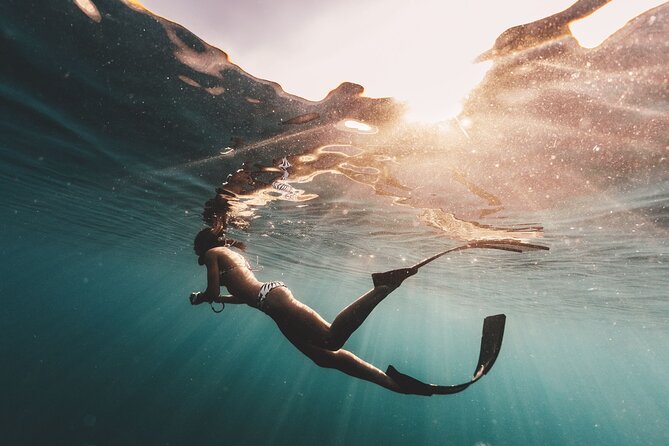
You meet at Freedive Nusa at the freediving school in Nusa Penida. From there, the crew provides equipment and a briefing, and you then head out by speedboat.
What’s included on-site is surprisingly useful:
- Hot shower and other facilities at the freediving school
- Safety boxes
- Hot ginger tea and/or coffee
- Water refill
Those details matter more than they seem. After a saltwater outing, having a real shower beats “wash off with whatever is nearby.” Safety boxes mean you can store valuables without improvising.
Group size also helps here. With a maximum of 12 people, the experience feels more organized than full-day boat tours that run like a factory line.
One review-based note you can use as a caution: people sometimes get confused by how transportation connects to the meeting point. Transfers from Bali to Nusa Penida are not included, and transportation to or from the meeting point is also not included. If you’re staying on the island, confirm exactly how you’re getting to Freedive Nusa so you’re not sprinting after schedule changes.
Price and Value: What $60 Includes (and What It Doesn’t)
At $60 per person, this isn’t the cheapest manta boat trip. But it also isn’t a bare-bones outing either. You’re paying for:
- snorkeling equipment and/or free-breath equipment
- wetsuits and fins (as needed)
- an instructor-led briefing focused on safety and manta interaction
- three distinct underwater stops
- speedboat transport between the school and the water
- hot shower, safety boxes, and hot drinks
So the question becomes: does that match what you want?
- If you want a guided, structured experience with a real focus on manta behavior and safety, $60 can feel fair.
- If you want the absolute cheapest way to see mantas, you may feel the price is high.
The big value snag is that Bali-to-Nusa-Penida transfer is not included and neither is local transport to/from the meeting point. That can add cost and time depending on where you’re starting that morning. If you don’t already have the logistics tight, factor that in before you book.
The tour runs about 4 hours, so it’s also not a long time commitment. For many people, that shorter window is part of the value.
Who Should Book This Nusa Penida Snorkeling Trip?
This is a great match if:
- you specifically want manta ray snorkeling at Manta Point
- you’re comfortable swimming in open ocean and following safety guidance
- you like coral snorkeling as a second priority (Toyapakeh Wall and SD Point deliver)
- you prefer a small group (max 12) with instructors in the water
This may not suit you if:
- choppy water can quickly make you feel unsafe or panicky
- you’re hoping for guaranteed manta rays every single time (no tour can control wildlife)
- you want a fully packaged door-to-door transfer from Bali (that part is not included)
It can also work well for first-timers who want reassurance and clear guidance, especially if the instructors are the kind that keep people calm in the water. The experience seems designed for safety and comfort, not just speed.
Should You Book It?
I’d book it if manta rays are your top goal and you also want a reef-based payoff across multiple stops. The early timing, small group size, and the “rules and safety first” briefing are the combination that makes this feel more intentional than a random manta run.
Skip it—or at least think hard—if you’re not confident with open-ocean swimming or if rough sea conditions would ruin the day for you. Mantas are amazing, but this is still wild nature, and the tour is honest about that.
If you can handle the sea, bring seasickness prevention, and show up ready for open-water snorkeling, Freedive Nusa’s Nusa Penida manta-and-coral trip is a strong choice.
FAQ
Where do I meet for the trip?
You meet at Freedive Nusa, the freediving school in Nusa Penida (Jl. Ped – Buyuk No. Desa, Ped, Kec. Nusa Penida, Nusa Penida, Bali 80771, Indonesia).
What time does the snorkeling trip start?
The start time is 10:00 am.
What’s included in the price?
You get snorkeling or free-diving equipment (including wetsuits and fins if needed), safety guidance, hot ginger tea and/or coffee, hot shower and other facilities at the school, safety boxes, and water refills. All fees and taxes are included.
How long does the tour last?
The duration is about 4 hours.
Is a transfer from Bali to Nusa Penida included?
No. Transfer from Bali to Nusa Penida is not included.
Do I need to arrange transportation to the meeting point?
Yes. Transportation to and from the meeting point is not included.
Are manta rays guaranteed?
No. This is wild nature, and while the crew tries hard (including trying other spots if mantas aren’t at Manta Point), they can’t guarantee sightings.
What snorkeling spots will you visit?
You visit three spots: Manta Point, Toyapakeh Wall, and SD Point.
What should I do if I get seasick?
The crew provides seasickness pills and advises you to have a light breakfast in the morning. The tour also warns the water can be very choppy.
How big is the group?
The tour has a maximum of 12 travelers.
What if weather changes the route or timing?
The tour may adjust the route and meeting time based on weather conditions. You should plan with flexibility for the day.
More Snorkeling Tours in Nusa Penida
- ️Nusa Penida by Private Boat – Snorkeling 4 spots, Swim with Mantas + Land Tour
★ 5.0 · 6,424 reviews
More Tour Reviews in Nusa Penida
- ️Nusa Penida by Private Boat – Snorkeling 4 spots, Swim with Mantas + Land Tour
★ 5.0 · 6,424 reviews
Not for you? Here's more nearby things to do in Nusa Penida we have reviewed
- ️Nusa Penida by Private Boat – Snorkeling 4 spots, Swim with Mantas + Land Tour
★ 5.0 · 6,424 reviews