REVIEW · MAUI
Kayak Whale Watch and Snorkel Hawaiian Islands Whale Sanctuary
Book on Viator →Operated by Maui Adventure Tours M.A.T., L.L.C. · Bookable on Viator
Whale songs through the water. On this Maui kayak-and-snorkel outing, you paddle near Turtle Reef and then head offshore in the humpback sanctuary, where an underwater hydrophone helps you hear Humpback whales sing live.
I love the hands-on small-group vibe and the fact that the snorkel stop is built around a turtle cleaning station rather than just a random float. I also like that you’re not doing this solo—guides stay in the mix, help with gear, and keep the day focused on wildlife.
One consideration: whale sightings are seasonal and weather-sensitive. Humpbacks are mainly December to April, and on choppy or murky days you might see fewer animals than you hoped, even though you’ll still get a real ocean adventure.
In This Review
- Key highlights you’ll care about
- Start at Olowalu: getting ready for a real paddle day
- Turtle Reef snorkeling: what the guide is really aiming for
- Kayaking for humpbacks: the hydrophone moment
- Stop-by-stop flow: how the morning is paced
- Guides and group size: why leadership changes the day
- What you get for $119: real value, real limits
- Weather and wind: the quiet deal-breakers
- Who this Maui kayak-and-snorkel tour fits best
- Should you book this kayak whale watch and snorkel in Olowalu?
- FAQ
- What is the duration of the tour?
- Where is the meeting point?
- What is included in the tour price?
- Is hotel pickup or drop-off included?
- When can I see humpback whales?
- Can children go on this tour?
- Do I need to know how to kayak before I go?
- What’s the maximum group size?
Key highlights you’ll care about
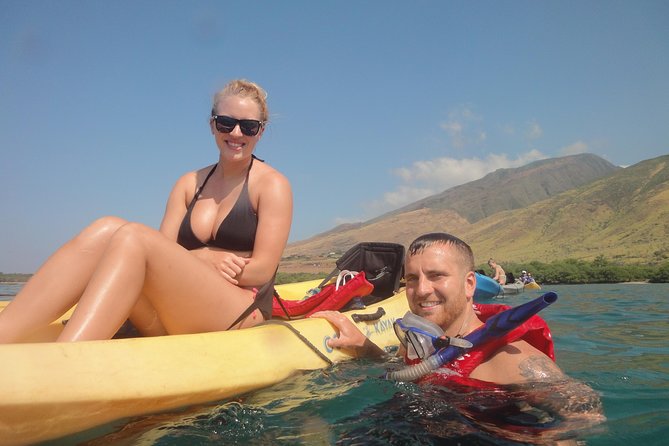
- Live whale songs from an underwater hydrophone while you’re out in the sanctuary waters
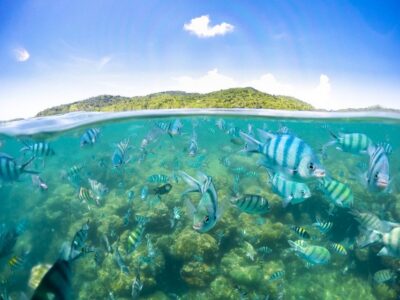
- Turtle reef snorkeling at Olowalu with sea turtles and lots of tropical fish
- Small group size (up to 10 travelers) for closer attention and an easier experience
- Snorkel gear plus life jackets included, along with bottled water and light snacks
- Roughly 2.5 hours on the water inside a ~4-hour total outing from launch to return
- HD underwater cameras available to rent for a better shot of what you see
Start at Olowalu: getting ready for a real paddle day
This is a morning tour that starts at 8:00 am and usually finishes around late morning (the listed operating window runs until about 11:30 am). You’ll meet at Olowalu (the provided pin is R95V+Q8 / R95V+Q89 in Olowalu). Hotel pickup is not part of the deal, so you’ll drive yourself and show up ready to launch.
If you’re coming by car, plan extra time for parking. One common theme from past riders: parking can turn into a headache on busy days, so arriving early helps you avoid rushing while you’re trying to get set up. Also, the meeting area is described as being close to mile marker 14 in the Olowalu area, which can make directions easier when you’re scanning for the right spot.
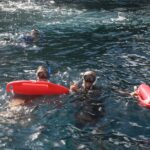
You’ll get the gear you need on-site: life jackets, snorkel equipment, and snacks/light refreshments plus bottled water. That matters because the day has two distinct modes—paddling and snorkeling—and having everything staged for you reduces friction. If you’re new to kayaking, this matters even more. The day is short enough that you want time in the water, not wrestling with equipment.
Fitness-wise, you don’t need to be an athlete, but you do need a moderate level of comfort with paddling and getting in and out of the kayak. There’s also a maximum weight limit (250 lbs) and the tour is for ages 5 and up, with children needing an adult along.
You can also read our reviews of more whale watching tours in Maui

Turtle Reef snorkeling: what the guide is really aiming for
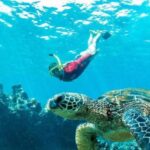
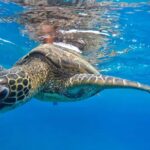
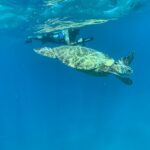
The snorkeling portion centers on Turtle Reef at the Olowalu Beach Reserve, where you’re looking for sea turtles at a turtle cleaning station. The key point for your expectations: this isn’t a “look for a turtle somewhere nearby” plan. The goal is to spend time where turtles feed/clean and where they’re likely to be active.
In clearer conditions, you can also expect plenty of colorful tropical fish—think schools you can easily spot even without being an expert swimmer. In some conditions, water may be less clear, and a few people have said snorkeling felt more subtle than they wanted. That’s not rare in Maui. Saltwater can be unpredictable. Still, the structure of this stop gives your eyes a job: focus on the cleaning-station area and let the guide lead you to where they’re seeing activity.
If you’re bringing a kid, this is also one of those moments where calm attention helps. Sea turtle encounters can get exciting fast, and you’ll want everyone to follow the guide’s timing and safety instructions so the group stays together in the water.
One more practical note from riders: depth and distance can make snorkeling feel different than “standing on a reef.” If you end up farther from the shallowest coral, it can make the view look higher off the bottom. Your best move is to go with the guide’s positioning and avoid trying to independently chase visibility.
Kayaking for humpbacks: the hydrophone moment
The whale watching portion happens offshore in the Hawaiian Islands National Humpback Whale Marine Sanctuary, with whale sightings typically from December to April. When this lines up, it can feel almost unreal: you paddle quietly out on the water and then hear the whales sing through the underwater hydrophone during the tour.
Humpback behavior varies day to day. Some mornings bring close activity—breaches and tail slaps right off the area where your group is focused. Other mornings are more distant, when whales stay farther out. Either way, the hydrophone is the big differentiator. Even when you can’t clearly spot every movement, you often get the “where are they?” audio payoff that turns whale watching into a full experience instead of just visual scanning.
Also, keep in mind that the tour is weather-dependent. It requires good conditions to operate, and wind matters for kayaking. The operator states they only go out when wind forecast is under 20 mph. Even so, ocean conditions can change, so you should treat “calm morning” as part of the recipe for the smoothest ride and the best viewing.
Stop-by-stop flow: how the morning is paced
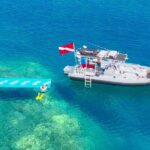
You’re essentially doing a compact sequence: launch, paddle out, whale watching, then turtle reef snorkeling before returning and finishing back at the meeting point. The biggest timing lesson is that the total duration includes the overhead you don’t see on a boat tour: handing out gear, launch setup, landing, and collecting everything again.
The on-water portion is roughly about 2.5 hours, with the rest of the time spent on the “do the logistics” part. That’s why the trip can feel like more or less depending on how smoothly things run at the start. A smooth start means more time in the water; a late start means more waiting before you’re actually kayaking.
So if you’re booking with other plans, build in slack for a morning that might run a few minutes differently. And if you’re prone to motion sensitivity, this is exactly the kind of activity where you’ll want to tell the guide early that you want extra consideration during the paddle portion so they can help you position and stay comfortable.
Guides and group size: why leadership changes the day
This tour is built for small groups, with a maximum of 10 travelers. That’s not just marketing. It’s what lets guides keep eyes on everyone when you’re getting into kayaks, moving as a group, and then switching to snorkeling.
In the best-case scenario, the guides are the whole reason the day feels easy. Past riders have praised guides like Lance and Wes (and also named Wesley and Red), for being friendly, attentive, and good at explaining both wildlife and Hawaiian context. One first-time kayaker experience described the gear being right and the guide taking care of them. Another praised how patient the guides were when a young rider got anxious near the end.
But I’ll be honest about the other side too: kayaking-with-snorkeling tours can feel chaotic if instructions aren’t clear and if the guides don’t coordinate well. Some people have reported confusing instructions, bickering between guides, late launches, and snack surprises. When that happens, the experience can feel more like a gear handoff than a truly guided adventure.
Your practical move: take a moment during setup to ask for a clear demonstration of how to get back into the kayak. At least one rider specifically wished both guides had modeled the re-entry technique before everyone started paddling back. It’s a small thing, but it can prevent frustration later—especially for kids.
Safety-wise, the tour includes life jackets and the guides manage the group. One rider also shared that help was quick when sea sickness hit. Still, ocean conditions and how your body reacts are factors you can’t control, so be ready with a calm, flexible mindset.
A few more Maui tours and experiences worth a look

What you get for $119: real value, real limits
At $119 per person, you’re not paying for a generic beach day. You’re paying for guided kayaking with wildlife focus, plus snorkeling time at Olowalu’s Turtle Reef, with gear and refreshments included.
Here’s what’s included:
- Professional guide
- Light refreshments and snacks
- Life jackets
- Snorkel equipment
- Bottled water
You can also rent HD underwater digital cameras, which is a big plus if you want better shots than your phone can handle in a moving kayak and splashing snorkel session.
What’s not included: hotel pickup/drop-off, and transportation to/from the meeting point.
Where value can wobble is in two areas. First, snacks are light. Even though snacks are included, riders have described days with minimal snacks (like a granola bar and fruit shared among the group). Second, wildlife isn’t guaranteed every minute. Humpbacks can be shy, and turtles can be less visible in certain water conditions. When animals are active and the guide is sharp that day, the value feels obvious. When conditions or sightings fall short, it can feel like a lot of money for a shorter payoff.
My take: this is a strong value if your priority is being on the water with a guide and experiencing both paddling and turtle reef snorkeling in one morning. If you’re chasing only humpbacks, you need to time your trip with whale season (Dec–Apr) and accept that the distance and activity level aren’t controllable.
Weather and wind: the quiet deal-breakers
This experience requires good weather. That’s not a vague disclaimer. For kayaking, wind and surface chop affect everything: how easy it is to paddle, how comfortable it is for kids, and how long your group can safely stay in the planned areas.
There’s also the water-visibility variable. Even when you get the right destination, some mornings are clearer than others. You might still see turtles and fish, but the “wow factor” can shift. One rider praised lots of fish and turtles on a beautiful day. Another noted murky conditions and still had an enjoyable time—just not as flashy.
If you can pick your date, aim for calmer mornings and choose a trip window during whale season if humpbacks are your main goal. And remember: this tour runs Monday through Saturday and is closed Sundays and holidays due to Hawaii state rules.
Who this Maui kayak-and-snorkel tour fits best
Book this if you:
- Want a small-group wildlife experience that combines kayaking and snorkeling
- Are excited by the idea of hearing humpback whale songs through a live hydrophone
- Like the idea of sea turtles at a dedicated turtle cleaning station
- Have a moderate comfort level with paddling and getting in/out of a kayak
- Have kids age 5+ who can follow safety instructions
It may not be the best match if you:
- Need a guarantee of close whale viewing every time (even during season)
- Really want a long, carefree snorkeling drift with minimal paddling
- Get stressed by tight morning logistics or a fast-paced switch between kayaking and snorkeling
- Are hoping for a solo kayak setup only (one family reported they were required to go in pairs)
Should you book this kayak whale watch and snorkel in Olowalu?
I’d book it if your “win” is a guided morning that puts you close to Hawaiian wildlife—turtles and, during season, humpbacks—with the added bonus of the live hydrophone. For $119, the mix of guide time, gear, and the whale audio experience is what makes this feel like a Maui-specific outing instead of a generic snorkeling stop.
Go in with two smart expectations:
- Whales are seasonal and not guaranteed to be close. December to April improves your odds for humpbacks.
- Weather and wind shape the smoothness. Calm conditions mean easier paddling and better comfort for everyone.
If you do book, here are a few practical moves that increase your odds of a great morning: arrive early to sort out parking, listen closely during the kayak setup (especially for getting back in), and let the guides know if you’re prone to motion sensitivity so they can help your group stay comfortable.
If you’re ready for an active morning on Maui’s water—sun, salt, wildlife, and all—this is the kind of tour that can turn into your favorite memory of the trip.
FAQ
What is the duration of the tour?
It’s about 4 hours (approx.), starting at 8:00 am.
Where is the meeting point?
You’ll meet at R95V+Q8 Olowalu (R95V+Q89 Olowalu), HI, USA, and the tour ends back at the meeting point.
What is included in the tour price?
The tour includes a professional guide, light refreshments and snacks, bottled water, and use of snorkeling equipment and life jackets.
Is hotel pickup or drop-off included?
No. Hotel pickup and drop-off are not included.
When can I see humpback whales?
Whale watching is from December to April.
Can children go on this tour?
Yes, the tour is for ages 5 and up, and children must be accompanied by an adult.
Do I need to know how to kayak before I go?
No experience is necessary.
What’s the maximum group size?
The experience has a maximum of 10 travelers.